
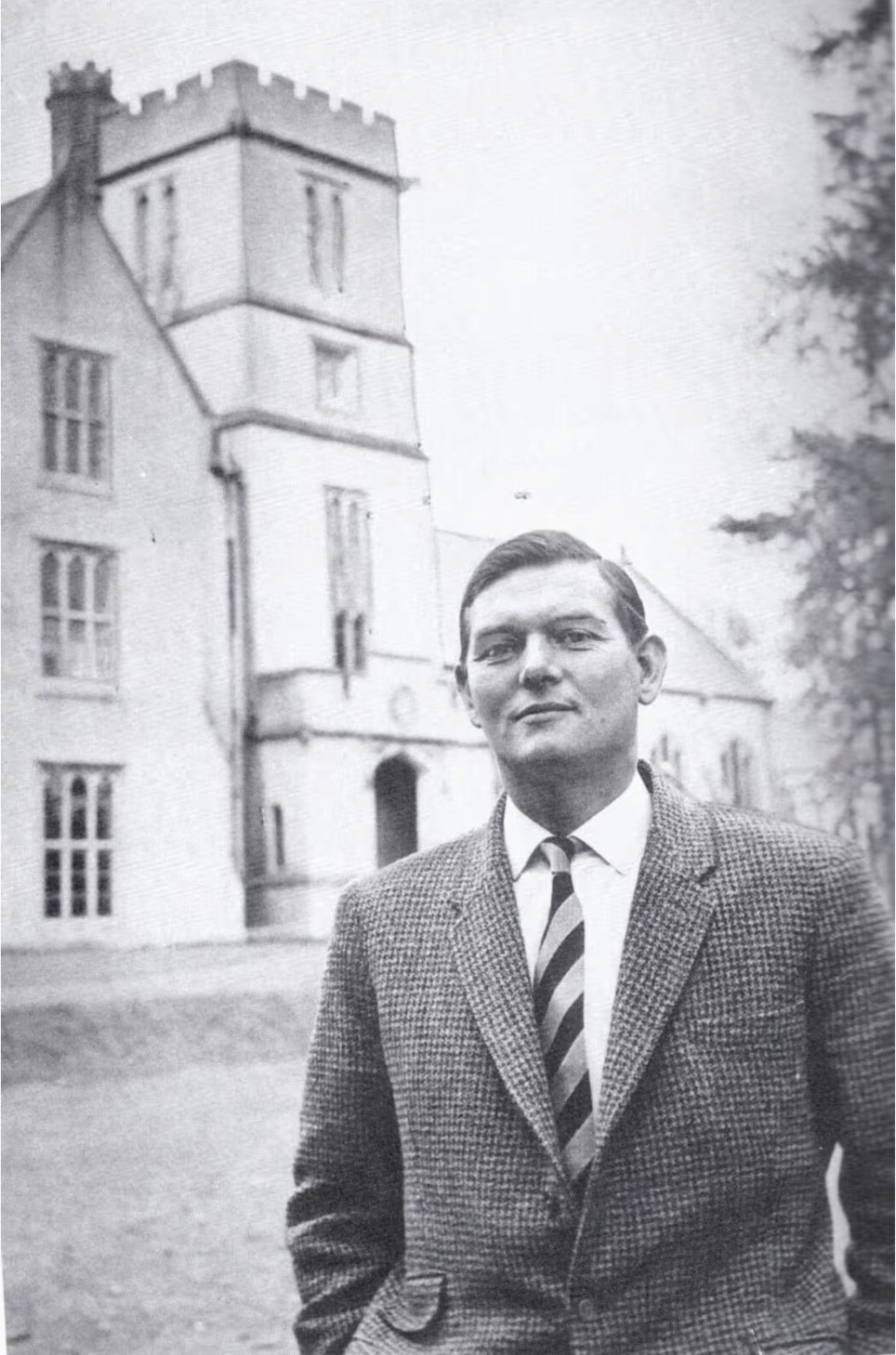
Carwyn James’ life was one of many segments. Remembered primarily for his achievements with the British and Irish Lions, his personal life and navy career are discussed at length too. A life cut short at just fifty-three, today we look back at his complex, and often secretive, life.
It is perhaps not unusual to refer to a deceased public figure as ‘tragic’, but it is perhaps unusual to refer to a deceased public figure as ‘lonely’. Yet those two descriptors are often tagged alongside ‘genius’ and ‘enigma’ when referring to Carwyn James. He remains the only coach to lead the British and Irish Lions to a series victory over the All Blacks, yet he never coached the Welsh National Team. Described as ‘the man everyone knew about, but nobody knew’1, his personal life was subject to rumour and speculation both during and after his life.
Carwyn James was born on the 2nd November 1929 in Cefneithin. The small village in Carmarthenshire had been home to the James family for just a few years, as Carwyn’s parents and three older siblings had moved there from Rhydlewis in Ceredigion when his older brother Dewi was still very young2. Whilst he visited his extended family in Rhydlewis often throughout his childhood, he was the only member of his family not born in Ceredigion; reportedly, this gave him a sense of otherness from his family members, something which he’d feel throughout his life for various reasons. In Cefneithin, he was known to be a conscientious child who attended chapel and helped out with the local post office, as well as playing soccer in the local fields with other children. Growing up in wartime West Wales, James’ early life would’ve been shaped by economic hardship, despite his family moving to seek work.
Education was extremely important to the Welsh-speaking James family, with Carwyn’s mother insisting that her sons did not turn to the local mines for work, as her husband had been forced to do. Whilst elder brother Dewi had attended the more rural Llandeilo Secondary before moving on to work in local banks, Carwyn passed the entrance exams to the Gwendraeth Grammar School3. At the Gwendraeth, he became incredibly close to his Welsh teacher, abandoning plans to study STEM subjects in Sixth Form in order to continue his studies under her. It was also at the Gwendraeth that he was first recognised for his rugby prowess. Whilst he was unsuccessful in his first attempt, James would go on to represent the Wales Schools side for two years. Gaining six caps, three of which were as captain, it allowed James to travel for the first time. It also put him on the radar for local giants Llanelli RFC, who brought him in to start a game before he’d left school. Unfortunately for James, the Scarlets were thrashed by the opposition, and it significantly set back his confidence. James’ ability as an athlete expanded far beyond rugby, as he was a keen cricketer and snooker player before leaving for university. He also reportedly once turned down a trial at Cardiff City football club at sixteen.
James was the first in his family to attend university, studying Welsh at the University of Aberystwyth. Interestingly, the Welsh schoolboys captain was not immune to university rugby politics as he was blocked from playing first team rugby during his first year of university. John ‘Alfie’ Brace was the captain for the 1948-49 season, which meant he was head of the selection committee. As Brace was a fly-half, James was relegated to playing for the second XV4. In his first year of university, he also played for Aberystwyth Town along with other local clubs, whilst staying on the radar of Llanelli RFC. He became captain of the university’s first XV in his second and third years after Brace’s graduation.

James’ time at university is often remembered for his various rugby escapades as well as his nationalist political values. However, it should be noted that this is also the period in which he may have begun to explore his sexuality. James’ biographer Alun Gibbard discloses that two anonymous academics confirm that James was in a relationship with a fellow male student during this time56 . It was also in this period that he began his close friendship with fellow student Dafydd Bowen. Gibbard does not explicitly state that Bowen and James were in a relationship; however, it is somewhat implied. The pair travelled together to Ireland, whilst Bowen also visited the James family home often during their university days. Later, in 1958 and 1959, when James was in his late twenties, he spent his summer holidays with Bowen. Bowen noted that the two ‘enjoyed two serene summers together’7 as adults. The pair were extremely close, and whilst modern eyes may read further into their relationship, there is simply no concrete evidence to say that they were in a romantic relationship. As Bowen wrote following James’ death: ‘many things remain now that no one else will know.’8
Following university, James spent time in the Navy, despite his nationalist ideology, later pacifism and inability to swim. Whilst most men his age began their national service at 17 or 18, James had been given a deferment in order to attend university. With a language degree, James was selected to be a member of the Joint Services School for Linguists (or JSSL). Here, James learned Russian and frequently travelled with the armed forces as a translator. Very little is known about this period of his life, which has led to rumours that he was a spy rather than a translator. The scant information we do have comes from interviews with fellow service members, who have stated that James travelled to Scotland and Berlin9. These same men, who knew James well, did not know anything of his sexuality; instead, they spoke of his rugby and singing abilities. During his national service period, he played in many armed forces rugby union matches. Like many Welsh rugby players before him, he was spotted by rugby league scouts. However, unlike players such as Clive Sullivan, James chose to turn down his offer to play professional rugby for Oldham10.
Whilst he would be required to return to the JSSL throughout his early adult life, he returned to Wales in 1954. It was at this point that he began his dual career as a rugby player and a teacher. Teaching Welsh at Queen Elizabeth Grammar School for a brief period before moving to Llandovery College to become the illustrious private school’s first-ever Head of Welsh. Continuing his playing career at Llanelli, he also achieved two full Wales caps, one at fly-half and the other at inside centre; his international career was hampered by the dominance of Cliff Morgan. Morgan was roughly the same size as James11; but he was significantly stronger and was also the incumbent ten when James rose through the ranks. Whilst some have argued that Morgan’s selection was a reflection of an East Wales or Cardiff bias in the selection criteria, it makes sense that the more senior of the two was the first choice. There were no hard feelings between the pair, with James staying with Morgan and his wife just before his ill-fated trip to Amsterdam in 1983.

James began developing his coaching philosophy after becoming the Head of Rugby at Llandovery in 196412. By this stage, the then 34-year-old James’ hopes of more Wales caps were more than over. Whilst coaching in schoolboy rugby was seen as necessary, as the players needed to learn to play the game, coaches in senior rugby were often seen as unnecessary. In 1964, James took part in a week-long coaching course in Dublin. It was an incredibly novel idea, and three of the men who attended the course would go on to coach the British and Irish Lions13. Ronnie Dawson became the first Lions coach in 1968, whilst Syd Millar would coach the Lions in 1974. Both men coached their nation too.
Carwyn was appointed the Head Coach of Llanelli RFC in 1969, having left his post at Llandovery and taking up a role at Trinity College, Carmarthen. Whilst James’ life at Llandovery was both peaceful and fulfilling, he left specifically to coach a senior team and be in with the chance of coaching the Lions. This period of change in James’ life proved to be incredibly chaotic. Leaving secondary education, leaving the cosy world of Llandovery College, for a higher education institute without live-in accommodation, was a huge change for James. He moved back to the house he grew up in as his ageing parents moved into a nearby bungalow. The changes paid off, however, as just six months after taking the helm at Llanelli, he was given the Lions job. Whilst many of the non-Welsh players had not interacted with James before, he came highly recommended by the Welsh players. His short record at Llanelli was notable; however, his refusal to be at Stradey Park during Llanelli’s game against the Springboks was perhaps his most notable moment to date.

James’ coaching achievements are some of the best in history. Of particular note is his record against the All Blacks, famously being the only coach to lead the Lions to a series win against the All Blacks, but also beating them as the coach of Llanelli and again as the coach of the Barbarians14. However, his newly increased fame across Britain impacted James’ love of the game significantly. Press interviews and speaking engagements were demanded of him, resulting in frequent travel across Britain. However, James himself often spoke of a need to speak of anything but rugby. The stress of the public pressure had an effect on James’ health. It had been well known that Carwyn James was fond of a drink, but the 1971 Lions tour of New Zealand was the first documented incident of regular heavy drinking, with reports of him publicly drinking at least a bottle of wine a night.
Another stressor on James were the swirling rumours regarding his sexuality. Whilst former players have mentioned not recognising or knowing of James’ potential queerness in recent interviews, the rumours about his sexuality swirled at the Welsh Rugby Union. James attempted several times to join the board in the early 1970s, but was denied each time. During this era, the WRU was dominated by Labour-voting, English-speaking East Walians. Carwyn was the direct opposite: a staunch Welsh-speaking nationalist who had previously run as a parliamentary candidate for Plaid Cymru. This on its own would’ve been enough to stop his acceptance to the board; however, in the hyper-masculine world of sport, being gay was the ultimate sin15.
1974 was perhaps the year which changed the trajectory of James’ life. Whilst it has been deemed the year that James was rejected by the WRU for the head coach role, this isn’t quite true. James had applied in early 1974, and he was an obvious choice for the role. However, during the selection process, James’ mother passed away16. James had always been sensitive to rejection, and it is likely that during this period of loss, he protected his own ego by withdrawing. In his letter of withdrawal, James explains that he would expect a certain level of control over the team, which he believed the union would be unwilling to give. One quote from the letter stands out: ‘I know that I am asking too much of the Union- that change takes time.’17 Whilst this was a reference to the control issue, it could also be a reflection of the optics of having a head coach who was heavily rumoured to be gay.
Throughout his rugby playing and coaching career, James had been involved in Welsh language sports broadcasting and publication. His unique knowledge of both language and sport had been fundamental in the development of official Welsh language sporting terms during the early days of Welsh language sports broadcasting. James moved to Cardiff after the death of his mother, strangely moving into a house share with John Dawes, the new Welsh head coach18, and began focusing almost entirely on his broadcasting and speaking career. Whilst he had previously worked across the BBC and HTV19, he heavily focused on his career at the BBC during his break from coaching. James spent a significant period of time on the road during this period, travelling across the UK for speaking engagements. James had always been known to be a messy person, and his car, specifically, was known to be full of changes of clothes and gifts from various rugby clubs. His messy car was noted by various anonymous BBC sources, some of whom claimed to Alun Gibbard that they had seen gay pornography in the boot of James’ car20.

In 1977, James was approached by Rugby Rovigo to take on the role of head coach. Rovigo is a small city roughly fifty miles from Venice, and in the 1970s, they had a desire to top the domestic table. In James’ two seasons with Rovigo, he led them to a second and first-place finishes. To celebrate their 1978-79 season win, the Rovigo team travelled to the Vatican to meet with Pope John Paul II, leading to a slightly bizarre photo of James and the Pope. James’ time in Italy seems exceptionally peaceful; he taught English at a local private school and coached a laid-back yet competitive side. He was also able to continue his broadcasting work, as the BBC sent out a crew to document his experience in a programme titled Llanelli Bolognese. During his two years in Italy, there is evidence that James underwent a period of self-discovery as seen in the books he left behind in his Italian flat. Whilst sporting and Welsh-language books were obviously found, so was a collection of romantic and erotic literature, including Delta of Venus by Anais Nin21. A groundbreaking piece of erotic literature, it is certainly a surprising book for a middle-aged man to be in possession of.

After two seasons in Italy, James returned to Wales in 1979. Purchasing a house in Cardiff, James lived with his older sister, Gwen. Gwen was also unmarried and had worked as a psychiatric nurse in England at a facility which offered sexuality conversion therapy22. Gwen provided a level of domestic stability which James required, as his previous stay in Cardiff and in Italy had been marked by loneliness. Returning to work at the BBC, James began drinking even more heavily than he had done previously, leading to a particularly notable incident in 1981, which resulted in his suspension. Having been drinking heavily, James went to commentate on a Bridgend v Swansea game for the radio. Unfortunately, he fell asleep, leading to him being sent to the Priory in London to “dry out”23. It was around this time that he also had a minor heart attack, which he kept secret from those around him. Whilst James’ family placed blame on the BBC for his welfare, it is safe to say that he had been spiralling for a long period. Alongside his heavy drinking, he was also a chain smoker who ate poorly, all of which exacerbated his psoriasis.
Returning to broadcasting in the autumn of 1982, Carwyn spent the last few months of his life juggling his poor health and his work at the BBC. Friends and family knew that Carwyn was struggling and were pleased when he announced he was going away for some sun during the festive period. Unfortunately, those plans fell through, and James ended up in Amsterdam in early January 1983. The night before his departure, his sister Gwen and brother Dewi tried to convince him not to go as they believed him to be ill; however, his BBC coworker Graham Price visited that evening, and he reported James to simply be drunk24. It is unknown what James got up to during his final week. However, based on the way he was found on the morning of the 11th January 1983, he had planned to spend his final night in Amsterdam out and about. Whilst his family did not pursue a full autopsy, it is believed that he suffered a heart attack whilst shaving25.
The sudden passing of Carwyn James caused shockwaves throughout Wales. Whilst his family held a private funeral at the family home, his memorial service the following week was heavily attended and widely reported. His memory has remained at the forefront of many Welsh rugby fans, especially Llanelli fans, with many memorial projects in his honour. However, whilst his sporting achievements are widely praised and remembered, many of the articles and posts about James have a salacious element.
Whilst same-sex relations between women have always been legal in the United Kingdom, same-sex relations between men had been illegal in Britain from the Middle Ages until their decriminalisation in 1967. The campaign for decriminalisation began in the 1950s after an increase in police stings and arrests. Whilst the Wolfenden Report recommended decriminalisation of homosexual acts for consenting men over the age of 21 in 1957, it took almost a decade for the legislation to pass due to extreme political pressure. When the Sexual Offences Act of 1967 was passed in July 1967, Carwyn James was 37 years old.
Despite homosexuality being legal, queer people had few rights and, for example, were not protected in the workplace. For those working with children, such as teachers and nurses, being queer was accepted as a sackable offence26. It was incredibly common for queer people to protect themselves by keeping their sexuality a secret, even if they were sexually active. When Wales’ first Pride March was held in the summer of 1985, James had been dead for two and a half years27.
Following James’ death, people from the various segments of his life have spoken out about his sexuality either in coded or open language. His sister Gwen spoke of how Welsh people tended to keep secrets bottled up to their own detriment28. As Gwen lived with her brother, this is a particularly interesting statement and suggests an aspect of ‘don’t ask, don’t tell’ in their relationship. It is reported that James frequently came home late during his last years in Cardiff and did not discuss his whereabouts with his sister. He also kept gay literature in their shared home29. His niece Bethan has openly discussed how she overheard those in Cardiff rugby circles derogatorily talking about her uncle having sex with men30. Bethan has stated that she attempted to discuss this incident with her family, but was brushed off. Many rugby-related figures have remained publicly neutral about his sexuality, often saying they were unaware. Navy friends have said the same. Whilst his nationalist and Welsh-language friends and colleagues have remained silent, BBC colleagues have spoken at length about the rumours off the record. Gibbard’s biography speaks at length about the reported same-sex relationships with colleagues, pornography in the boot of his car, and even an incident when he was reportedly punched for propositioning an uninterested man on a night out in Cardiff in 198231. Whilst the BBC was probably the most socially liberal circle in which James publicly frequented, the off-the-record gossip from the anonymous sources shows that there was an element of salaciousness and trivialisation about queerness rather than true acceptance.
An underreported aspect of James’ life is his mental health struggles. His alcohol dependence, along with his depressive episodes, is often attributed to his ‘personal struggles’32. However, whilst his potential sexuality may have been a factor in his mental health struggles, depression, anxiety and stress can affect anyone regardless of background or perceived struggles. Interestingly, considering the time period in which James lived, he saw a psychiatrist. Dafydd Huws was involved in nationalist circles, but he also saw James professionally as a patient. Gwen and Dewi James have criticised Huws for his lax approach to patient confidentiality, but his lengthy quote about his patient perhaps provides the clearest view of Carwyn James at the time of his death.
‘Carwyn was a man who carried many burdens, which were more than most of us can comprehend, let alone edure. They were pschological and physical burdens and I don’t know how he managed to cope so well, and be such a productive man.’
-Dafydd Huws shortly after the death of Carwyn James33.
Carwyn James’ legacy burns bright. Whilst one particular news outlet enjoys a yearly article about his ‘spy’ past34 and the day the pubs ran dry is celebrated just as frequently, talk of James’ sexuality is brought up almost as much. This article has spoken at length about the evidence which could suggest that James was attracted to men; it has done so in the context of queerness in Britain at the time in which James lived. This context is often missing from discussions about James’ sexuality entirely. It is, however, perhaps the most important aspect of the discussion.
Whether Carwyn James was simply an introvert, a man racked with anxiety, a gay man during an intolerant era or a combination thereof, he was certainly someone who struggled and used a combination of alcohol and food as a coping mechanism. Whilst it is unlikely that we will ever have concrete evidence of his sexuality35, James will always be remembered for far more than just his success in rugby. Importantly, I believe that’s what he would’ve wanted.

Marking Pride Month felt important, and Carwyn James felt like an important tale as his life coincided with the decriminalisation of homosexuality in Britain. There are plenty of excellent pieces of media and memorials of Carwyn, including the play Carwyn36 and both the Welsh and English language versions of Alun Gibbards’ biography of Carwyn James, which has been heavily referenced throughout this piece.
You may notice some changes to my graphics; I had a wee refresh for our first birthday! I’ve also updated the shop- you can now find it directly on the site with new designs.
If you would like more regular updates, please check out my Instagram, Facebook, Twitter, and/or Bluesky. You can also catch me podding with WRRAP or with Women’s Rugby Treehouse somewhat regularly this summer.
An audio version of this post is also available in all good podcasting locations, and video versions are now available on YouTube and Spotify. As always, references are below.
-Hattie
Thanks for reading The Rugby History Project! Subscribe for free to receive new posts. If you would like to help support the project financially, you can find the details here.
- Alun Gibbard, Into the Wind: The Life of Carwyn James (Y Lolfa, 2022), pp. 11. ↩︎
- Gibbard, Into the Wind: The Life of Carwyn James, pp. 19. ↩︎
- Gibbard, Into the Wind: The Life of Carwyn James, pp. 67-68. ↩︎
- Gibbard, Into the Wind: The Life of Carwyn James, pp. 99. ↩︎
- Gibbard, Into the Wind: The Life of Carwyn James, pp. 408. ↩︎
- Other men would later come forward to confirm they had relations with James or that James propositioned them. ↩︎
- Bowen in Gibbard, Into the Wind: The Life of Carwyn James, pp. 199. ↩︎
- Bowen in Gibbard, Into the Wind: The Life of Carwyn James, pp. 112. ↩︎
- Gibbard, Into the Wind: The Life of Carwyn James, pp. 122-123. ↩︎
- Gibbard, Into the Wind: The Life of Carwyn James, pp. 129. ↩︎
- Both were approximately 5 feet 7 or 8, depending on the source. ↩︎
- Gibbard, Into the Wind: The Life of Carwyn James, pp. 162. ↩︎
- Gibbard, Into the Wind: The Life of Carwyn James, pp. 185. ↩︎
- He is recognised as the first coach of the Barbarians, even though he was called a technical advisor at the time. ↩︎
- Gibbard, Into the Wind: The Life of Carwyn James, pp. 303. ↩︎
- Gibbard, Into the Wind: The Life of Carwyn James, pp. 310. ↩︎
- James in Gibbard, Into the Wind: The Life of Carwyn James, pp. 305. ↩︎
- Gibbard, Into the Wind: The Life of Carwyn James, pp. 313. ↩︎
- Harlech Television, the precursor to ITV in Wales. ↩︎
- Gibbard, Into the Wind: The Life of Carwyn James, pp. 408. ↩︎
- Gibbard, Into the Wind: The Life of Carwyn James, pp. 348. ↩︎
- Gibbard, Into the Wind: The Life of Carwyn James, pp. 375. ↩︎
- Strangely, his treatment was arranged and paid for by Graham Jenkins, the brother of Richard Burton. ↩︎
- Gibbard, Into the Wind: The Life of Carwyn James, pp. 374. ↩︎
- The Guardian, “Lonely Prince of Coaches,” The Guardian, March 22, 2001 <https://www.theguardian.com/sport/story/0,3604,460980,00.html>. ↩︎
- India Pollock, “LGBT Attitudes in Wales: ‘Huge Distance’ Travelled in 30 Years,” BBC News, March 15, 2019 <https://www.bbc.co.uk/news/uk-wales-47569273>. ↩︎
- EAC, “Pride or Protest? Wales’ First Gay Pride March, 1985,” Wales since 1945, March 21, 2019 <https://walessince1945.wordpress.com/2019/03/02/pride-or-protest-wales-first-gay-pride-march-1985/>. ↩︎
- Gwen James in Gibbard, Into the Wind: The Life of Carwyn James, pp. 410. ↩︎
- Gibbard, Into the Wind: The Life of Carwyn James, pp. 423. ↩︎
- Bethan Cox in Gibbard, Into the Wind: The Life of Carwyn James, pp. 409. ↩︎
- Gibbard, Into the Wind: The Life of Carwyn James, pp. 408. ↩︎
- A euphemism for his rumoured homosexuality. ↩︎
- Huws in Gibbard, Into the Wind: The Life of Carwyn James, pp. 398. ↩︎
- Wales Online, I’m talking about you. ↩︎
- Bar the release of a diary, I cannot see this happening. ↩︎
- Noel Gardner, “New Play CARWYN Pulls Back Curtain on a Tragically Overlooked Welsh Rugby Hero,” Buzz Magazine, March 3, 2022 <https://www.buzzmag.co.uk/carwyn-james-play-torch-theatre-wales-review/>. ↩︎
Leave a Reply