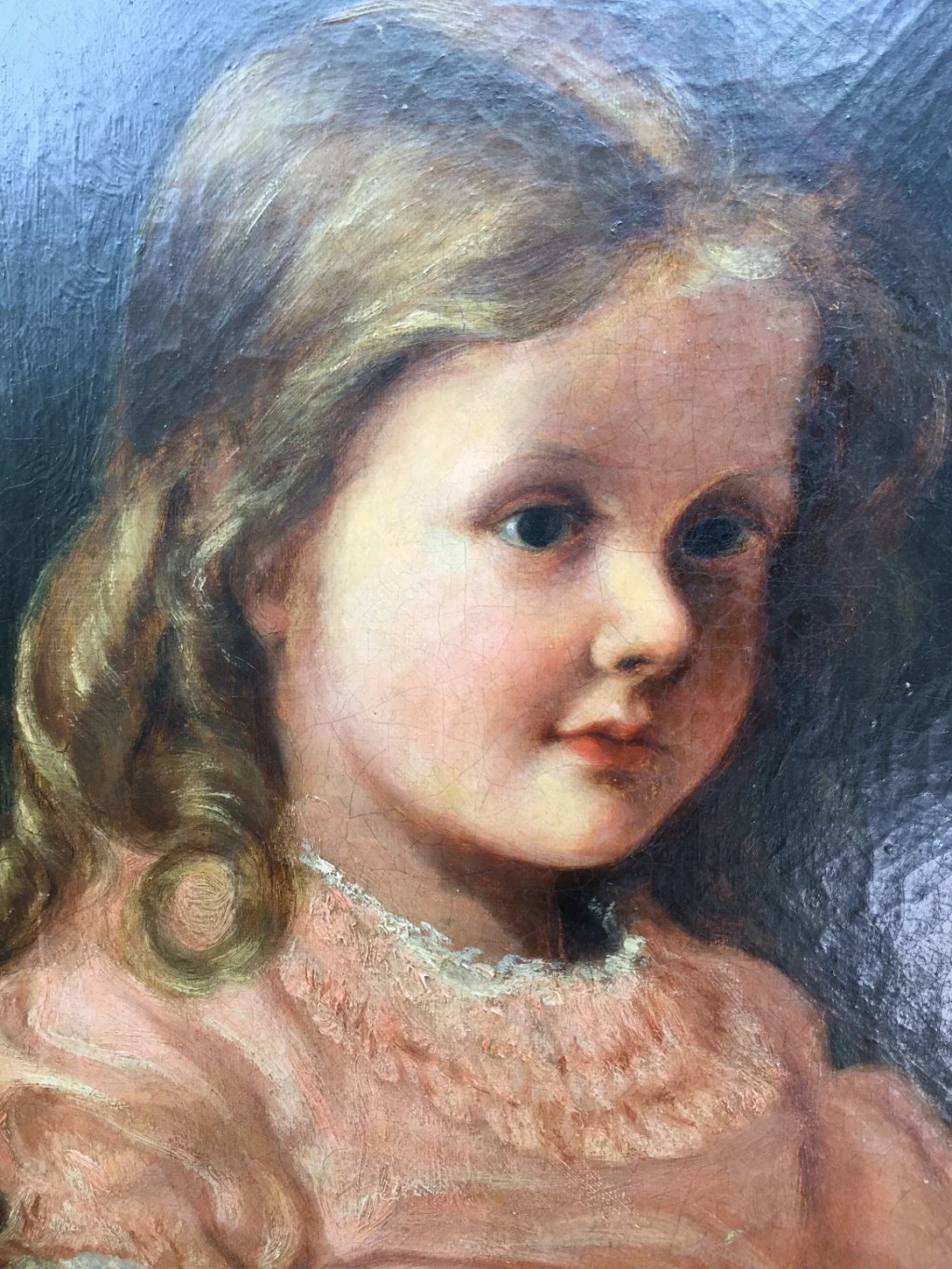
Emily Valentine was only ten when she picked up a rugby ball and played for Portora Royal School in Enniskillen. Since 2010 she has been hailed as the ‘female William Webb Ellis’ but how true is this?
The story of Emily Valentine was hidden for over a century until rugby writer John Birch uncovered the story in 2010. The story itself is relatively simple: in 1887, Portora Royal School needed an additional player for a rugby match. They called on the ten-year-old child of the school’s deputy head teacher: a girl named Emily. Stuck out on the wing, Emily finally got her hands on the ball and sprinted for the try line. The story itself is magical and perfectly inspirational, to the point that Defender has launched an entire campaign based on the tale in preparation for the 2025 Women’s Rugby World Cup. But how true is the story, and is it fair to compare Emily Valentine to William Webb Ellis?
Defender advertisement featuring a reenactment of Emily Valentine’s rugby game in 1887.
Emily Valentine was born in 1877 in Enniskillen, Ireland1. Her father, William Valentine, was a school teacher and began teaching at Portora Royal School in Enniskillen in 18832. The school was ostensibly an all-boys school, but records indicate that all of the Valentine children undertook their schooling there34. Whilst Portora had previously been a well-to-do school which produced well known alumnae, such as Oscar Wilde, the school had fallen on hard times, which resulted in the headmaster leaving and William Valentine becoming the de facto leader5. As a part of the school’s decline, the rugby team had ceased to exist. The Valentine children had reportedly been involved with reviving the team, and Emily’s brothers William and John were keen players6.

In the winter of 1887, the team was a player short for a match. In need of a player, it was somehow agreed that William and John’s little sister Emily would take the pitch. Emily had previously practiced with her brothers and was known as a lover of the game; however, allowing a young girl to compete in a rugby match against teenage boys went against almost every rule of Victorian propriety7. The event was not reported upon by newspapers nor mentioned in a match report8; instead, the reports of the match come from the memoirs of Valentine herself.
‘I loved rugby football, but seldom got a chance to do more that kick a place kick or drop goal, but I could run in spite of petticoats and thick undergarments, I could run. My great ambition was to play in a real rugby game and score a try. I used to stand on the touchline in the cold damp Enniskillen winter, watching every moment of play, furious when my side muffed a ball, or went offside, bitterly disappointed when a goal was missed.
One day I got a chance. It was just a school scratch match and they were one “man” short. I was about ten years old. I plagued them to let me play, “Oh, all right. Come on then.” Off went my overcoat and hat – I always wore boys’ boots anyhow, so that was all right.
I knew the rules. At last my chance came. I got the ball – I can still feel the damp leather and the smell of it, and see the tag of lacing at the opening. I grasped it and ran dodging and darting, but I was so keen to score that try that I did not pass it, perhaps when I should; I still raced on, I could see the boy coming toward me; I dodged, yes I could and breathless, with my heart pumping, my knees shaking, I ran. Yes, I had done it; one last spurt and I touched down, right on the line. I lay flat on my face for a moment everything went black. I scrambled up, gave a hasty rubdown to my knees. A ragged cheer went up from the spectators. I grinned at my brothers. It was all I hoped for. I knew I couldn’t kick a goal, but that didn’t worry or disappoint me; what I had wanted to do I had; the desperate run, the successful dodging, and the touchdown.
On the way home, muddy and hot. “You didn’t do badly, Em, but you should have…” and so on. Later on at tea my brothers grinned at me, passed me the jam politely, and kicked me under the table. My mother remarked that she hoped I hadn’t felt cold watching the game. “I’m glad you won the match boys, ” she said. My brother raised his cup, looked at me, and drank then winked. “Good luck, wasn’t it mum?”‘
– Emily Valentine9
Evidence suggests that Valentine took to the pitch again, at least for training and potentially a few inter-school games10; however, she did not continue playing as an adult. There is little public information about Valentine’s life; we know that she became a nurse and then married a doctor called William Galwey. The pair moved to India before settling in London1112. She did write private memoirs for her family whilst she resided in a London care home during the 1960s13, and it is in these memoirs that the story of her rugby playing exploits were discovered. Initially, the story was referenced in The Times newspaper before being unearthed by John Birch in 2010. Since then, the story has picked up mythological qualities, not unlike the tale of rugby’s “inventor”, William Webb Ellis.

One of the most well known stories associated with rugby is that of William Webb Ellis. The boy at Rugby School who picked up the football and ran with it, thus inventing rugby. The story is so well known and widely accepted that the Men’s Rugby World Cup trophy is named after him. Except, there are no actual contemporary reports of a child named William Webb Ellis picking up the ball. What is more likely is that the early board members of the Rugby Football Union, who were all Old Rugbeians, wanted to legitimise their claims on the origins of the game and therefore attributed the birth of the game to a former student14.
The story of Emily Valentine has been utilised in a similar fashion to the myth of William Webb Ellis. The tale of a Victorian schoolgirl playing rugby legitimises the idea of women and girls playing rugby, and makes it more palatable to conservative audiences. Rather than the sport having its origins in the feminist movement15, the story of Emily Valentine gives the sport a similar origin story to that of men’s rugby. Whilst Valentine’s story is certainly more likely to be true than the story of Webb Ellis, she simply did not contribute to the foundations or development of the women’s game as we know it. Much like William Webb Ellis, the tale of Emily Valentine of Enniskillen is simply a nice story.

I hope you have enjoyed the sixth edition of The Rugby History Project. I somehow managed to squeeze in one small post before the start of the Rugby World Cup! If you are in need of podcasts to check out for your World Cup travel time, please check out The Rugby History Project Podcast, or if you would like World Cup coverage, please check out Women’s Rugby Treehouse on YouTube, Spotify or Apple Podcasts. Women’s Rugby Treehouse is hosted by myself, along with my friends Sian and Julia. Feedback and suggestions are welcome as always.
-Hattie
Thanks for reading The Rugby History Project! Subscribe for free to receive new posts, or consider upgrading to Historian Tier to support the project!
- The partition of Ireland did not take place until 1921. ↩︎
- “The Remarkable Emily Valentine | Ulster Rugby,” Ulster Rugby <https://ulster.rugby/content/the-remarkable-emily-valentine>. ↩︎
- John Birch, “Who Was the First Woman of Rugby?,” Rugby Relics <https://www.rugbyrelics.com/Museum/topics/womens-rugby-history.htm>. ↩︎
- The most famous of Portora Royal School Alumni would be the one and only Oscar Wilde. ↩︎
- Ali Donnelly, Scrum Queens (Chicester, West Sussex: Pitch Publishing, 2020), pp. 21. ↩︎
- Birch, “Who Was the First Woman of Rugby?” ↩︎
- Although her mother did not attend the match, and had no clue Emily had played in it. ↩︎
- That we know of. ↩︎
- Valentine in Birch, “Who Was the First Woman of Rugby?” ↩︎
- Neil Curry and Christina Macfarlane, “Emily Valentine: Will ‘the First Lady of Rugby’ Join Hall of Fame?,” CNN, June 23, 2016 <https://edition.cnn.com/2016/06/23/sport/emily-valentine-first-lady-of-rugby>. ↩︎
- “Emily Valentine – the First Girl to Play Rugby (1887/8).” ↩︎
- Some reports note that she lived, and perhaps died, in South Africa. However, this does not fit the narrative given by Valentine’s granddaughter to CNN in 2016. ↩︎
- Curry and Macfarlane, “Emily Valentine: Will ‘the First Lady of Rugby’ Join Hall of Fame?” ↩︎
- Huw Richards, A Game for Hooligans, 2nd edn (Edinburgh: Mainstream Publishing, 2007), pp. 26. ↩︎
- Or god-forbid lesbians *gasp*. ↩︎

 Home
Home 
Leave a comment