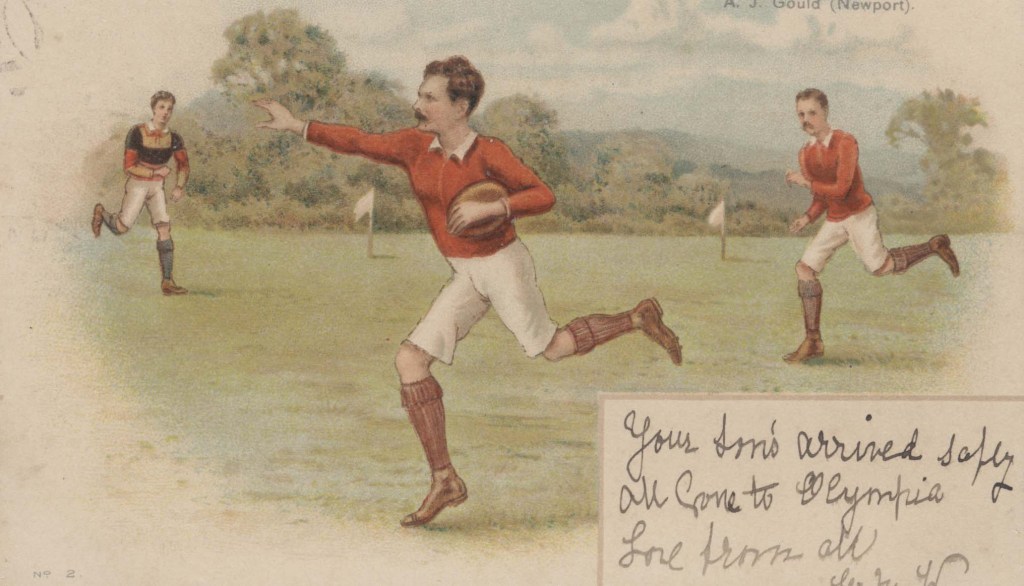
Just a few years after the first official Home Nations tournament, the then very small rugby world would be torn apart by one man and his house.
For a thirty-four year period at the turn of the twentieth century, Newport RFC boasted the talents of the Gould brothers. Harry, Bob, Arthur, Bert, Gus, and Wyatt Gould1 all lined out for the Victorian heavyweights hundreds of times. It would be Arthur, however, who would not only achieve the most success in rugby, but also remains both the most famous and infamous of the brothers.
Born on the 10th October 1864 as the fourth of twelve children born to Elizabeth and Joseph Gould in Newport. The Gould family were athletic, with father Joseph a keen cricketer, whilst the brothers split their time between athletics, rugby, cricket, and even gymnastics. Eldest brother Harry would be the first to represent Newport, and the only member of the family to be sent away to public school2, whilst second eldest Bob would be the first of the three brothers who represented Wales at test level. Young Arthur was well known for his athleticism from a young age, as he was often found climbing trees, which led to his nickname ‘Monkey’. After captaining the Newport Juniors side as a teenager and playing a handful of games for the thirds, Arthur was given an opportunity.
Whilst some accounts claim that Arthur was only 16 when he first played for the Newport first team, it actually took place on the 18th November 1882, just over a month after his eighteenth birthday. The then starting fullback, Fred Dowdell, had failed to confirm if he was available for the game. As such, Rodney Parade groundsman John Butcher was sent down to his house to check on him. No one is quite sure how young Arthur found out about the issue, but considering elder brother Bob was on the team, and eldest brother Harry had been a part of the inaugural team, a pretty obvious explanation comes to mind. Butcher found Arthur skulking around the end of Dowdell’s street nervously, and upon confirmation that Dowdell himself was at a funeral, offered him the starting fullback position. Despite Arthur being a centre by trade, he shone at fullback, scoring two tries on debut. Dowdell would find himself demoted to reserve for the rest of the season on his return from the funeral3.
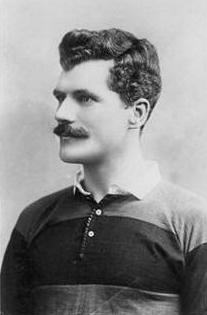
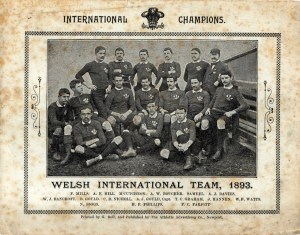
Arthur worked for the family business, and as such found himself frequently travelling across the South of England. Because of this, not only was he a Newport regular, but he also found himself running out for London Welsh, Richmond and Middlesex, amongst others. Just over two years after his first-team debut for Newport, ‘Monkey’ was capped for Wales for the first time. Starting at fullback on the 3rd January 1885, Arthur recorded his first international points against the English in Swansea4. He would move to his preferred position of centre the following year to great acclaim. He would go on to break the international cap record in 1896 and retired with 28 caps, 18 of which as captain. Whilst 28 caps may not seem like a great number in 2026, rugby historian Gwyn Prescott notes in his biography of Gould that he took part in 80% of Wales’ 34 test matches played between his debut in 1885 and his international retirement in 18975. Never dropped from the test side, Arthur, on occasion, made himself unavailable for selection due to work commitments or injury. He captained the side the first time they beat England, as well as their first-ever Home Nations championship win in 18936.
It is truly hard to fully explain how popular the ‘Prince of Centres’ was, both in Wales and abroad. Newspaper articles spoke of him fondly, even following losses, and he was even featured as a character in the Cardiff Theatres pantomime in 18957. Wales was desperate to celebrate and immortalise their captain, as he was now over thirty years of age and surely headed towards retirement. The Welsh public’s desire to celebrate Gould’s career, however, would inadvertently play a part in its ending. The Gould Affair has somewhat overshadowed Arthur Gould’s career in the modern era, and this author is aware of the irony of it being the central theme of this article. However, the ‘Affair’ is a great representation of rugby politics in the Victorian era.
Following a six-nil win over Scotland in 1896, Welsh newspapers began to speak of a ‘testimonial’ for Monk. Testimonials for great sportsmen were not without precedent in the late Victorian period. As sport in the late Victorian period was primarily built on the foundations of amateurism and that of gentleman athletes, testimonials allowed for athletes to receive monetary reward for their craft, whilst still maintaining their amateur status, as the reward was classed as a gift. The summer prior to the start of Arthur’s testimonial campaign, The Daily Telegraph had run a campaign for the ‘National Testimonial Shilling Fund’ for the ‘Grand Old Man of Cricket’ WG Grace. The fund raised £5000 for the cricketer, who retained his amateur status and continued to play8.
‘He is to the Rugby game what Dr Grace is to the sister past time. What do Welsh footballers say to the proposition that the veteran’s inestimable services to the game, which is still growing in popularity in Wales, should be recognised in the form of the presentation to him of a national testimonial?’
-Old Stager, South Wales Daily News, 1896
Arthur kept himself at arm’s length from the initial hubbub surrounding his testimonial, as did the Welsh Football Union9. It is often said that the WFU were the figures behind the testimonial; however, this is simply not true. The most vocal figures behind the testimonial were the South Wales Daily Newspaper, as it was to this newspaper that the public were instructed to send in their subscriptions10. On the very first day of the campaign, £100 had reportedly been raised11. By midweek, a number of former players had also subscribed, along with Merthyr MP DA Thomas. Whilst the scheme had been started as a ‘shilling fund’, many businessmen had donated far greater sums. Organisers were shocked by how much money had been raised and boosted by the success of the fund, and suggested that the fund go international.
The ‘Gould Testimonial Fund’ was officially launched at the Talbot Hotel in Newport, with prominent businessmen, politicians and journalists in attendance. Local solicitor Llewellyn Phillips and ship-broker, and member of Newport Athletic Club, William Orders, were named as co-secretaries of the campaign. Their first official acts, however, would prove to cause one of the biggest fallouts in international rugby. By popular vote, the secretaries were instructed to write to the WFU and other international rugby unions, such as the Irish, Scottish and English boards, to ask for support for the fund. The Irish were in Leeds to prepare for their Home Nations game against England, as such the two unions took the chance to have a formal meeting to discuss the Welsh rugby supporters’ request. The RFU ruled that, working on the assumption that the fund was monetary, not only could the union not support the fund, but they also could not allow English clubs to subscribe either. They also stated that if Arthur Gould accepted the testimonial fund, he would be classed as a professional in their eyes and would not be allowed to play in international competition. Despite the ruling from the RFU, English rugby fans subscribed to the fund. By the 4th February 1896, the fund had raised £2101213.
The WFU met on the 27th February and, based on the ruling by the RFU, decided that they had to withdraw their support for the fund. Fund organisers were determined to come up with a solution which would both celebrate and reward Gould whilst also allowing him to remain an amateur. The following month, it was decided that a suitable solution would be for the money to be put towards purchasing the house in which Arthur was renting in Newport. The WFU pledged £50, an amount they thought would be permissible to the RFU, as Richmond had recently given their captain, William Bromet, a silver plate worth that amount upon the event of his engagement. With the WFU happy with their resolution that Gould would be presented with a house14 rather than cash, the RFU made the WFU aware that they found this also to be objectionable.
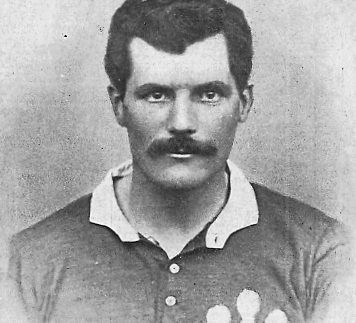
Amongst the noise, Monk had continued to play rugby. He broke the international cap record on the 14th March 1896 in Wales’ Home Nations clash against Ireland in Belfast, where he had scored his side’s only points. He also continued to play for Newport, who won the unofficial Welsh championship that season. However, upon the conclusion of the season, the International Rugby Football Board held a special meeting to discuss Monk and his house. The English held six out of the twelve available seats on the board, and with the Scots being perhaps even more stringent against professionalism, it was not surprising when the Welsh were told that the arrangements were still not permissible. The IRFB ruled that a plate worth £100 would be allowed, with any additional funds to be donated to charity. Bizarrely, the IRFB ruled that if the plans were to go ahead, not only would Gould be classed as a professional but so would all of the subscribers. Based on the ruling, the WFU removed their support for the fund, as well as the £50 donation they had previously pledged.
When the following season started, Newport were without the services of Arthur Gould. He had not yet been deemed a professional, as he had not received the testimonial, but he had announced that at the age of 32, he was retiring. However, when Newport was struck with injuries, he came out of retirement after just five weeks. It is possible that had Gould slipped into retirement, he could’ve received the testimonial with no issue. However, after reports of his return to the pitch, the IRFB contacted the WFU for an update on what had become of the affair. As the WFU had withdrawn their support, and Gould had stated he would not accept the testimonial if it affected his amateur status, along with his “retirement”, the WFU felt that there was nothing more to be done.
The Gould Affair truly came to a head in 1897. Surprising no one who had seen Newport play that season, Arthur Gould once again led out Wales in their opening Home Nations match. Beating their rivals England 11-0 at Rodney Parade, it would be the last time that Gould took the pitch for Wales15. The next Welsh international was to be against Scotland three weeks later, and based on the success of the previous game, selectors announced an unchanged side. The Scots, however, announced that they considered Arthur to be a professional16 and that they would refuse to play the match if he was in the line-up. With the Scots peppering the WFU with questions, which the Welsh refused to answer as they came from a fellow union rather than the IRFB, an emergency meeting was called. It was clear that the board now saw Gould as a professional, and as such, the WFU were at a crossroads. However, rather than back down as they had done so previously, the WFU passed several resolutions at their own emergency meeting. The WFU stated that, as the IRFB themselves had no laws regarding professionalism, they were out of jurisdiction and could not enforce their ruling. Additionally, they found that no one involved had broken the union’s own laws on professionalism. After these resolutions were not accepted by the IRFB, the WFU left the board17.
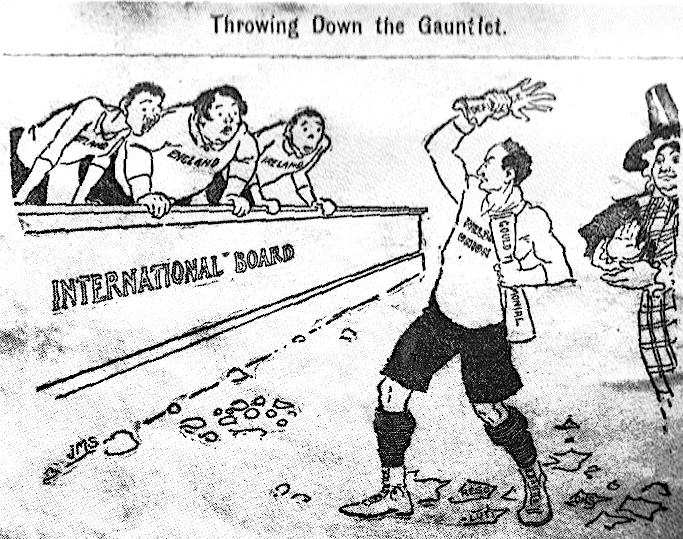
The choice to support Arthur over the international game was an exceptionally popular choice in Wales. Whilst Arthur struggled with injury for the rest of the season18, his testimonial moved ahead, as did the WFU’s political manoeuvrings. The union ruled that, as the rules of professionalism had not been breached, they would once again be pledging £50 to the fund and would also be allowing any member clubs to also subscribe. They also ruled that in the upcoming season, they would have the power to prevent Welsh sides from playing international opposition.
Whilst not being able to play English clubs wouldn’t have affected many of the clubs in Wales, it would have disproportionately affected the West Country heavyweights such as Gloucester, whose Welsh fixtures made up a third of their calendar19. Following the Northern split, the prominent clubs of South Wales were consistently the strongest in Britain and also usually featured the largest crowds. The withdrawal of support for cross-border competition may have finally spooked the RFU.
The split of Northern clubs, which had taken place less than a year prior to the initial suggestion of the Gould testimonial, haunted the RFU and perhaps offers an explanation as to why they were so heavy-handed. The Northern Union had allowed broken time payments, a practice which deemed all involved as professionals under RFU laws. The loss of the Northern clubs from the English system greatly weakened both the domestic and international game. It may have been felt that by allowing the testimonial for Gould, professionalism would spread further in the game. However, losing Wales from the international game and Welsh clubs from domestic competition would weaken them further.
On the 19th April 1897, the Arthur Gould Testimonial finally took place. Firstly, Newport played against Rockliff at Rodney Parade, securing their 22nd win of the season. This was followed by a grand banquet held in Gould’s honour in the evening20. 250 men21 crammed into Newport’s Albert Hall. With the main address being given by the WFU president, and with local MPs, the mayor and even the Argentine consulate in attendance. Presented with an illuminated address, Gould went home to Thornbury House. The house he now owned.
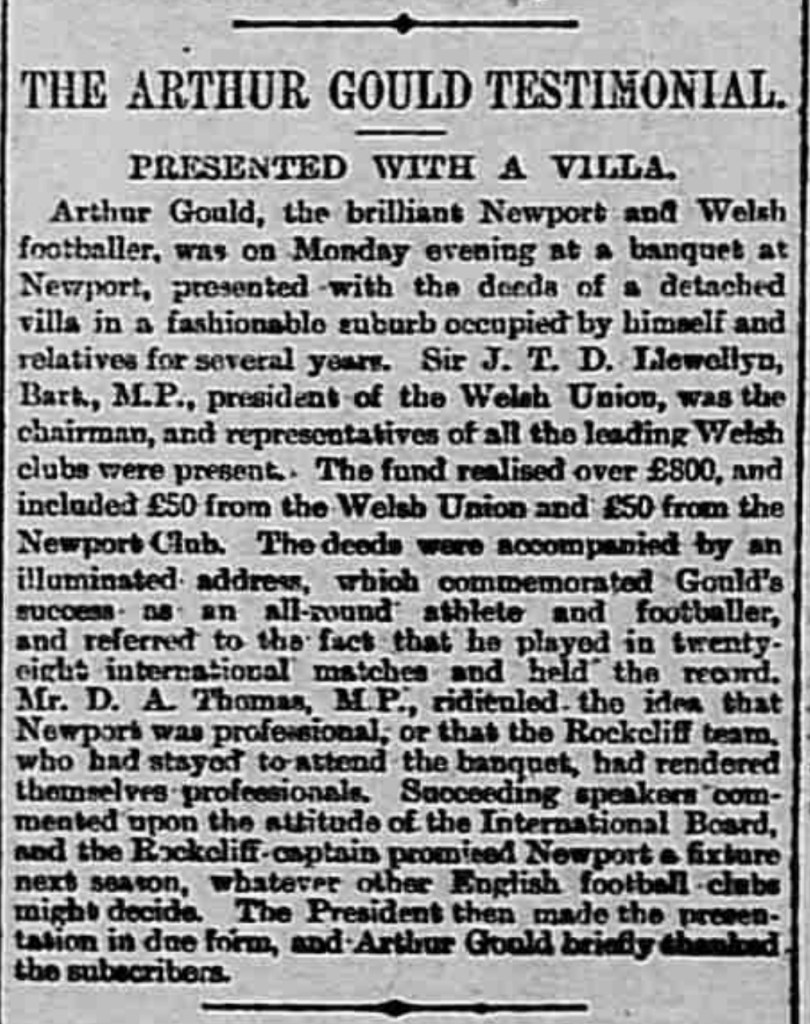
Based on previous rulings on the situation, Gould was now considered a professional by the other unions. Except in the summer of 1897, the RFU ruled that due to ‘exceptional circumstances’ behind the testimonial, he wasn’t22. Whilst Gould would eventually be banned from playing for English clubs, as well as refereeing in England, he was free to play in Wales. For the Welsh national side, they would be readmitted to the IRFB in 1898 upon recommendation from the Irish, albeit with the condition that Gould be made unavailable from future international selection23. Whilst the Scots refused to play Wales during the Home Nations in 1898, Wales were not subjected to any further flak from the IRFB. Gould himself would sit on the WFU board for the rest of his life, and enjoyed a brief stint as a referee24, before passing away suddenly at the age of 54 in 1919.
Happy St Davids Day! I aimed to write something Wales related prior to St Davids Day and I’ve just about made it. My main source for this text is Arthur Gould- Rugby’s First Superstar by the one and only Gwyn Prescott. His biography of Gould is truly top tier and I would recommend it to you all.
If you would like more regular updates, please check out my instagram, twitter and/or bluesky. You can also catch me podding every Tuesday morning with WRRAP. An audio version of this post is also available in all good podcasting locations, and video versions are now available on YouTube and Spotify. As always, references are below.
-Hattie
Thanks for reading The Rugby History Project! Subscribe for free to receive new posts, or consider upgrading to Historian Tier to support the project!
- Gwyn Prescott, Arthur Gould: Rugby’s First Superstar (St. David’s Press, 2023), pp. 4-5. ↩︎
- Prescott, Arthur Gould: Rugby’s First Superstar, pp. 9. ↩︎
- Prescott, Arthur Gould: Rugby’s First Superstar, pp. 20-21. ↩︎
- Prescott, Arthur Gould: Rugby’s First Superstar, pp. 36-37. ↩︎
- Prescott, Arthur Gould: Rugby’s First Superstar, pp. xii-xiii. ↩︎
- World Rugby Museum, “Ode to Arthur ‘Monkey’ Gould,” World Rugby Museum, February 9, 2016 <https://worldrugbymuseum.com/from-the-vaults/players/ode-to-arthur-monkey-gould>.. ↩︎
- Prescott, Arthur Gould: Rugby’s First Superstar, pp. 147. ↩︎
- Prescott, Arthur Gould: Rugby’s First Superstar, pp. 152. ↩︎
- The then name of the Welsh Rugby Union. ↩︎
- Prescott, Arthur Gould: Rugby’s First Superstar, pp. 154. ↩︎
- Approximately £11000 in 2026, according to the Bank of England. ↩︎
- £24000 in 2026. ↩︎
- Prescott, Arthur Gould: Rugby’s First Superstar, pp. 157. ↩︎
- A house he already lived in mind you. ↩︎
- Prescott, Arthur Gould: Rugby’s First Superstar, pp. 175. ↩︎
- He had yet to accept the testimonial. ↩︎
- Kyle Phillpots, “The Professionalisation of Rugby Union” (unpublished PhD Thesis, University of Warwick, 2000) https://wrap.warwick.ac.uk/id/eprint/4498/1/WRAP_THESIS_Phillpots_2000.pdf, pp. 93. ↩︎
- Described as ‘water on the knee’, it was probably some form of ligament damage. ↩︎
- Prescott, Arthur Gould: Rugby’s First Superstar, pp. 181. ↩︎
- Somehow, he also found time to officiate at an athletics meet in the afternoon. ↩︎
- Women were not allowed to attend. ↩︎
- Phillpots, “The Professionalisation of Rugby Union.”, pp. 93. ↩︎
- Huw Richards, “Arthur Gould: Welsh Rugby’s First Superstar – ESPN,” ESPN.Com, October 22, 2014 <https://www.espn.co.uk/rugby/story/_/id/15338572/arthur-gould-welsh-rugby-first-superstar>. ↩︎
- Which he reportedly was very, very bad at. ↩︎
 Home
Home 
Leave a comment