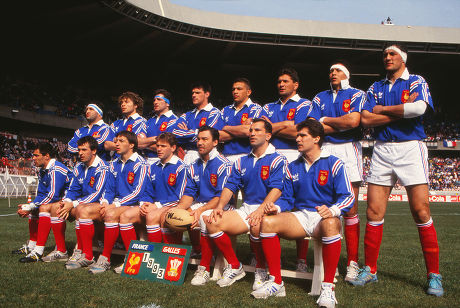
The world’s oldest international rugby tournament is full of quirks. With the 2026 edition underway, this article looks at the weird world of the Men’s Six Nations.
In February and March every year, the rugby world is gripped by five rounds of the highest level of men’s European international rugby. Originally a series of unorganised men’s internationals, the Six Nations now consists of a structured men’s competition, an under-20s men’s competition, and a women’s competition, which, since 2021, has run after the two men’s competitions. There are also U21 women’s and U18 boys and girls competitions, which run in different formats. The way in which the concept of the Six Nations has expanded and developed is fitting for a competition that didn’t formally start as a competition.

It is widely accepted that the first official Home Nations, as the Six Nations was originally known, took place in 18831. However, this official start date is somewhat misleading and not very ‘official’ either. For several years, England, Ireland, Scotland, and Wales had been playing in regular, yet unorganised, annual matches against one another. Beginning with the first international test match between Scotland and England in 1871, the Home Nations series grew gradually until Wales entered the fray in 1881. The 1880-1881 season would be the first in which all four nations competed in international rugby; however, importantly, none of the four teams played all three of the other nations. This would first happen in 1883, when both England and Scotland played three games each, but it wouldn’t be until the following year that the round robin was completed for the first time.
Whilst 1883 is used as the official start date for the contest, the stance of the Rugby Football Union at the time was that organised competitions were against the spirit of the game. In the first decade after the official start date of 1883, the competition was completed only five times. It wouldn’t be until the RFU were forced to relinquish some control over the game that the idea of a competition in which all teams played each other was formed. In the 1884 competition, England scored a try against Scotland, which the Scots believed should not have counted as the Scots had knocked the ball on. The ensuing drama led to the English stating that, as they had invented the sport and written the law book, they were right. Unsurprisingly, the Scots refused to play the English the following year, and between 1886 and 1887, the three Celtic unions formed the International Rugby Football Board. The aim of the board was to govern without bias and for the IRFB to be the true lawmakers of the game. The English refused to join; they stated it was because they had more clubs than the other countries, but with their rather blunt expression, just two years previously, it was clear they really just didn’t want to relinquish control of the game. In 1888 and 1889, the three Celtic nations refused to play the English due to their refusal to join the IRFB. After the admission of the English to the IRFB in early 1890, with the caveat that the English retained six board seats to each Celtic nations two2, the Home Nations returned at full strength but this time with a more organised feel.
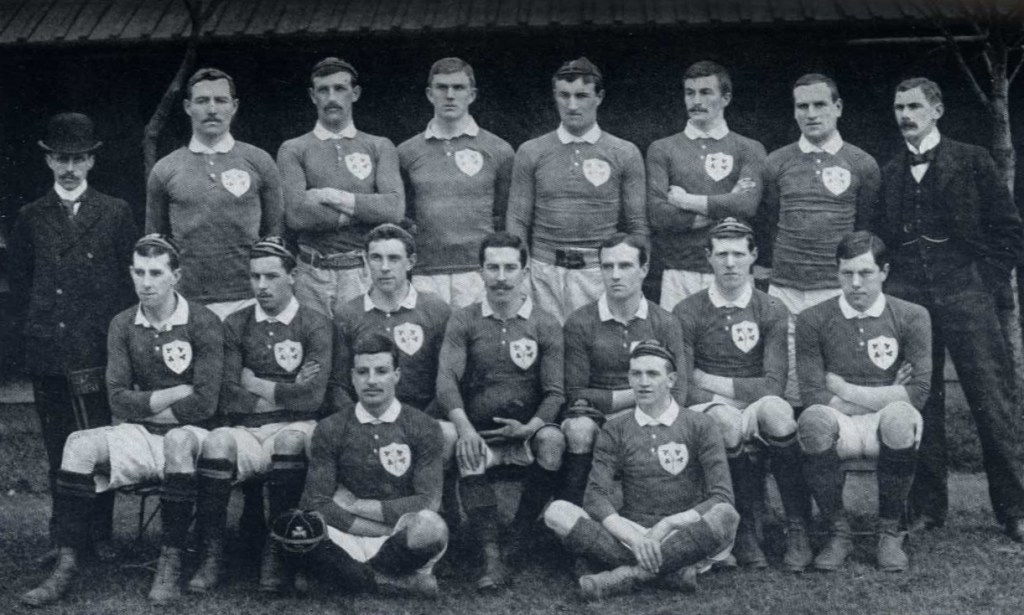
The 1890’s would bring about major changes to the Home Nations. One of the first acts of the IRFB was to change the scoring system. Beginning with the 1891 Home Nations, it was agreed between all four nations that one point would be given for a try, an additional two if the try was converted, and three points for a drop goal or penalty3. Scoring before this was slightly convoluted. Initially, rugby rules dictated that placing the ball over the line simply allowed you to try and kick a goal for a single point. This means that a team that scored 10 tries but converted none would draw with a team that had not crossed the line once. In late 1875, it was decided that tries scored could be used in a tie breaker, but it wouldn’t be until the formation of the IRFB that thorough discussions would be held regarding scoring. Whilst the four nations all agreed that conversions should be worth 2 points, and drop goals and penalties 3, the Scots were in favour of awarding 2 points for a try rather than 1. This meant that the individual game results for the 1890 Home Nations were reported differently in Scotland than in the other three countries, causing issues for historians such as John Griffiths4. The 1891 competition is the first in which all four countries used the new IRFB regulations on scoring. A try would later be increased to be worth 3 points during the 1894 competition5 whilst drop goals and conversions changed their points value variously throughout the period.
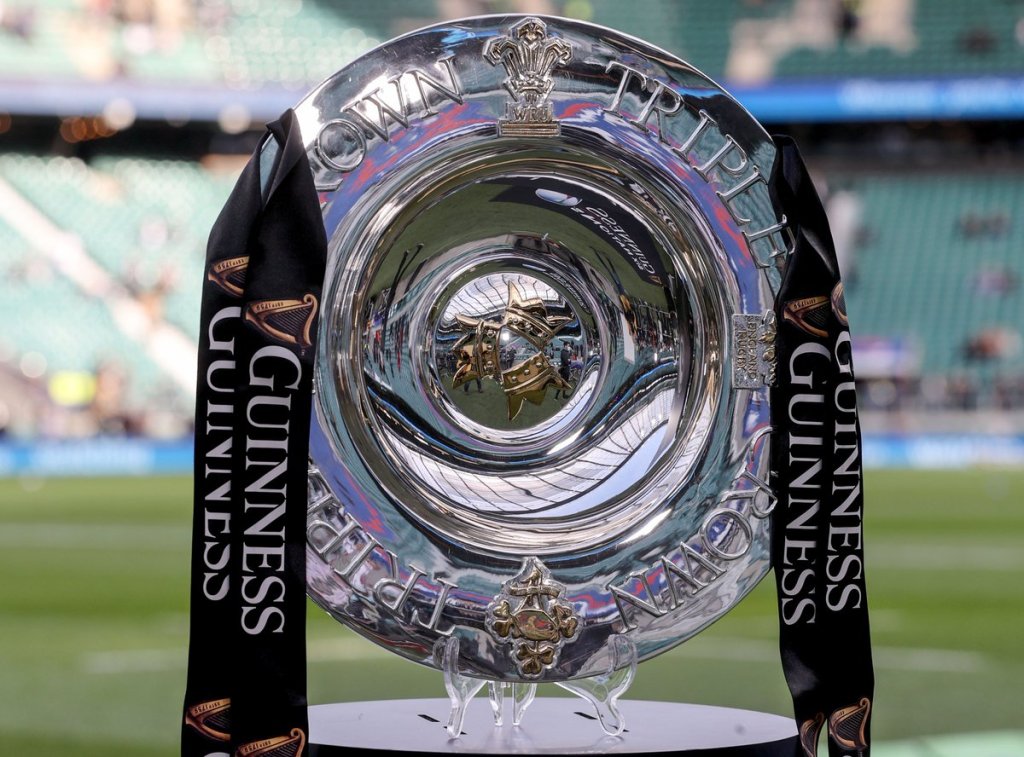
The second of the big changes was the introduction of the concept of the ‘Triple Crown’. The first usage of the term was in the Irish Times on the 12th March 18946, after Ireland recorded wins over England, Scotland and Wales during that year’s competition. This was the first time that Ireland had completed the feat; England, however, had done so three times and Wales and Scotland once each. Whilst the title continues to be contested between the four nations to this day, a physical trophy for the Triple Crown was not created until 2006. The physical Triple Crown plate was introduced by the then sponsor, the Royal Bank of Scotland7.
Games against France took place as early as 1906, with England beating France 35-6. Wales and Ireland would take on Les Bleues for the first time two and three years later, respectively. The official introduction of France to the Home Nations, and the renaming of the tournament to the Five Nations, took place in 1910. It wouldn’t be until 1957, however, that a name would be given to the feat of winning every game in the tournament. The Times’ Uel Titley coined the term after England completed the feat8. Other journalists, such as the Daily Telegraph’s Michael Melford, also used the term in their reports at the time. Like the Triple Crown and Wooden Spoon, Grand Slam wins were backdated to include the wins prior to the coining of the term. This leads Wales to hold the honour of achieving the first ever Grand Slam. Whilst England won the 1910 competition, albeit without a Grand Slam due to a draw against Ireland, Wales had not only completed the Triple Crown in 1908 and 1909, but they had also beaten France in both years in supplementary games. In recent years, the Grand Slam has become a more official part of the tournament, as from the 2017 competition, a team that achieves a Grand Slam is awarded three bonus table points. This ensures that the Grand Slam winners cannot be overtaken in table points by a team that has won fewer games, and ensures a Six Nations victory for those who complete a Grand Slam9.
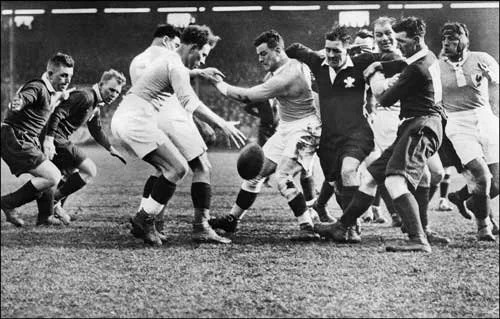
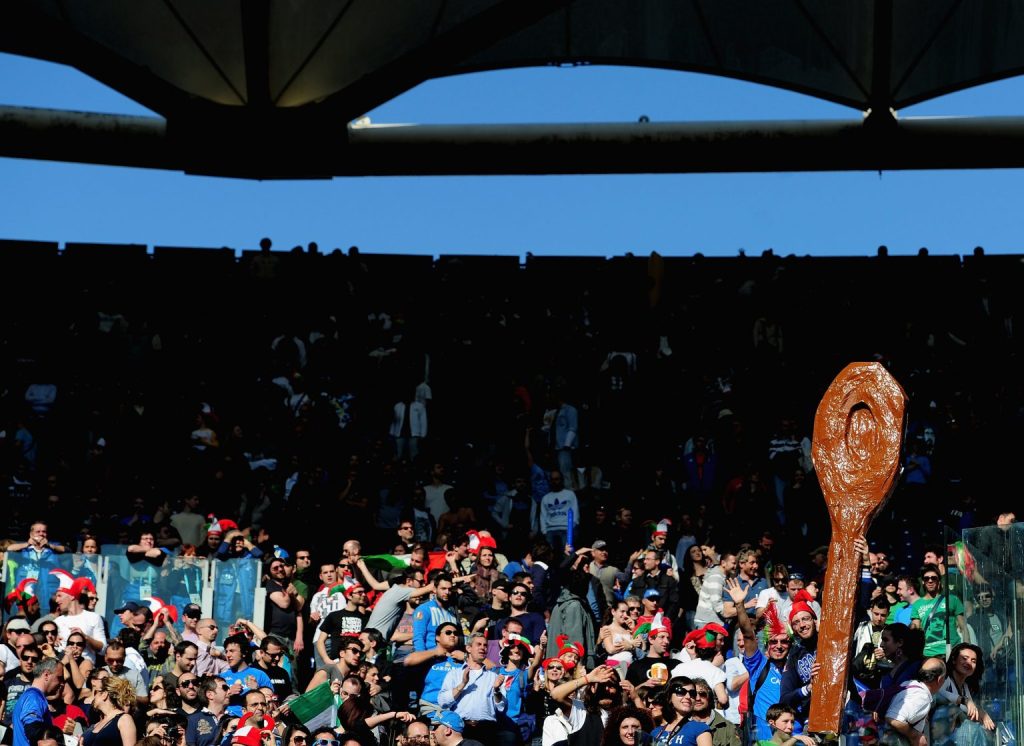
Whilst the Triple Crown and Grand Slam have become official parts of the Six Nations, the most notorious accolade is not an official part of the competition. In the nineteenth century, it was tradition for the University of Cambridge student with the lowest maths exam score to be given a literal wooden spoon10. Unsurprisingly, with the status of rugby in Britain during the late nineteenth century, the term was introduced as the ‘award’ for the team that came last in the Home Nations. There is some debate on the first usage of the term, with some claiming it was first used in 1894 by a journalist from the South Wales Daily Post, whilst others have claimed it was used two years earlier by the Reverend F. Marshall in his book Rugby Football. If the first usage of the term was in fact in 1892, it means that the award for last place is the oldest ‘trophy’ in the competition.
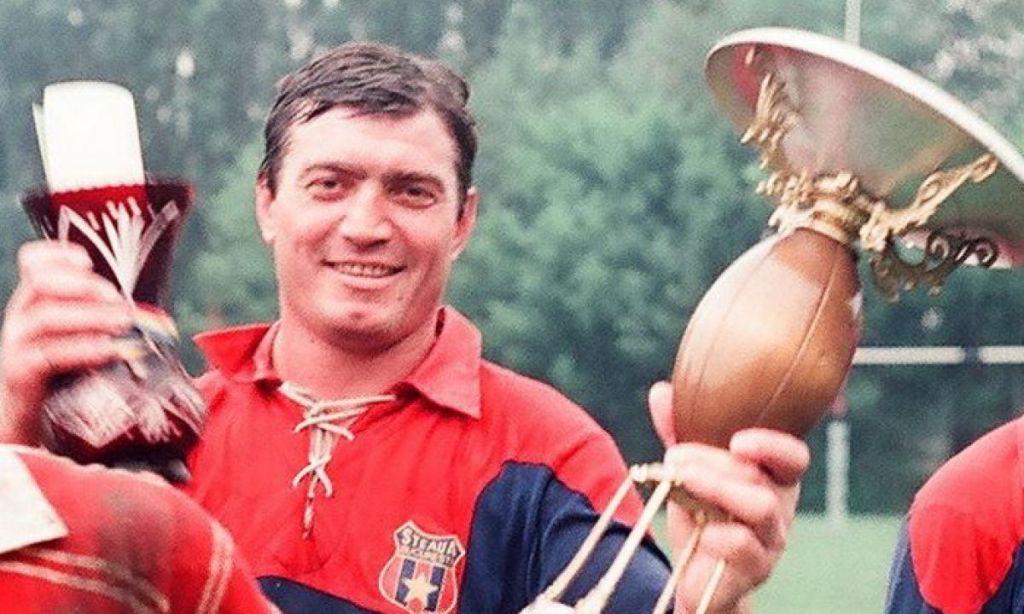
Expansion of the Five Nations was hotly debated from the readmittance of France after World War Two. The French had been removed from the competition in 1932 due to complaints surrounding professionalism, but had returned after the war break in 1947. The Oaks of Romania were firmly the best non-Five Nations side in Europe in the latter half of the twentieth century. With wins over France, Scotland and Wales as well as a draw against Ireland, Romania was the obvious choice to expand the championship11. However, Romania’s political situation caused issues for those in Western Europe. Between 1947 and 1989, Romania was under a communist government. Upon gaining power in 1965, leader Nicolae Ceaușescu controlled the country in one of the most repressive regimes in modern history. The traditionally conservative rugby leadership in Western Europe bristled at the prospect of getting into bed with the Romanian Rugby Federation, who were also not so secretly paying players12, but understood that it was also important to stop the Romanians defecting to rugby league13. The six-year period between the fall of communism in 1989 and the advent of professional rugby in 1995 saw the greatest highs and lowest lows for Romanian rugby. Whilst they recorded wins against France and Scotland during this period, they were preceded by the deaths of at least five players on Christmas Day 1989 during the Romanian Revolution14. Among the dead was seventy cap international and captain Florică Murariu, who was shot dead in the street by an army reservist. His family, and the public, learning of his death when his body was shown on television later that evening15. The other four confirmed dead rugby players were Petre Astafei, Bogdan Stan, Cristian Toporan and Florin Butirii, who were all members of the 1989 team16 as well as 1970s legend Radu Durbac. With state sponsorship of sport waning in the post-Ceaușescu era and the adoption of professionalism by the rest of the rugby world, the advantages Romania had in the seventies and eighties were no longer there.
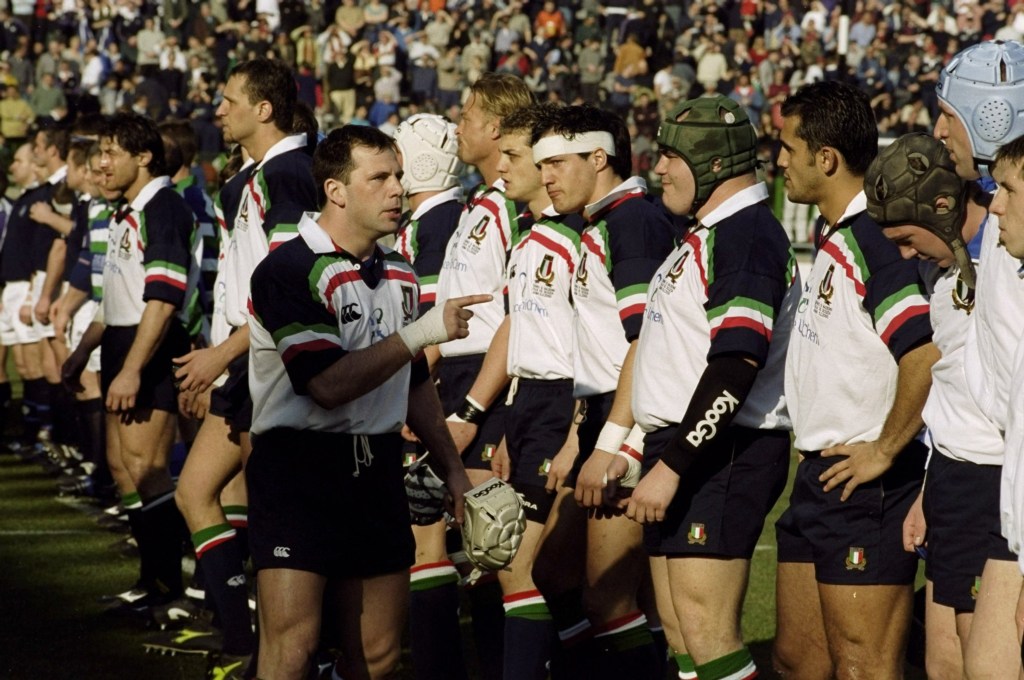
Whilst Romania fought for admission to the highest level of European competition, it would be Italy who finally cracked the top tier. After a series of close wins for the Azzurri over Scotland, France and Ireland during the late 1990s, the Men’s Six Nations was born. Italy’s poor results in the Six Nations have called into question their participation, however it should be said that France also struggled initially. France’s first championship win was in 195417, in their twenty-fifth year of official participation.
In 2026, it was announced that France and Ireland would be competing for the Solidarity Trophy18, the eighth rivalry trophy awarded in the competition and the fifth introduced in the twenty-first century.
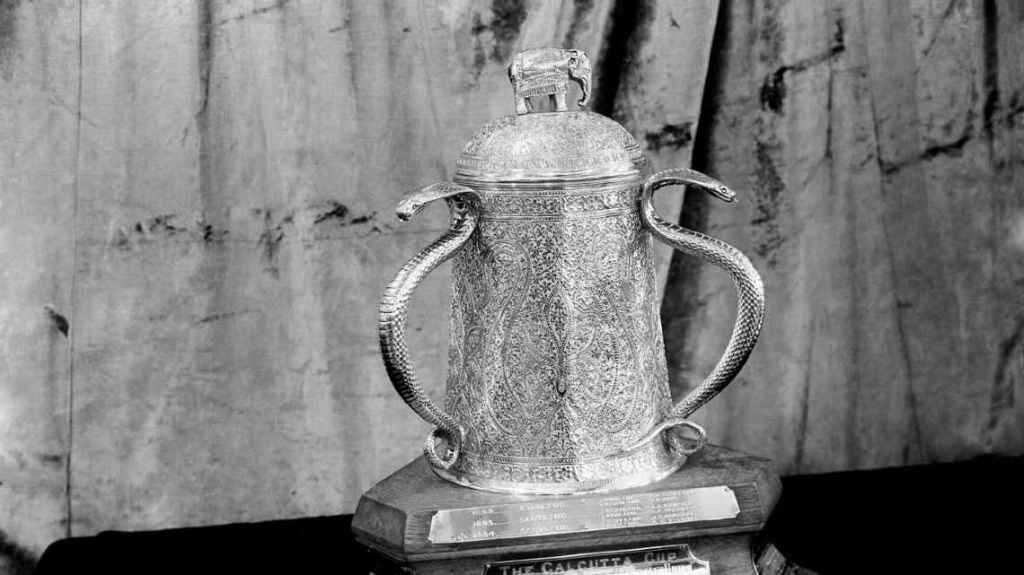
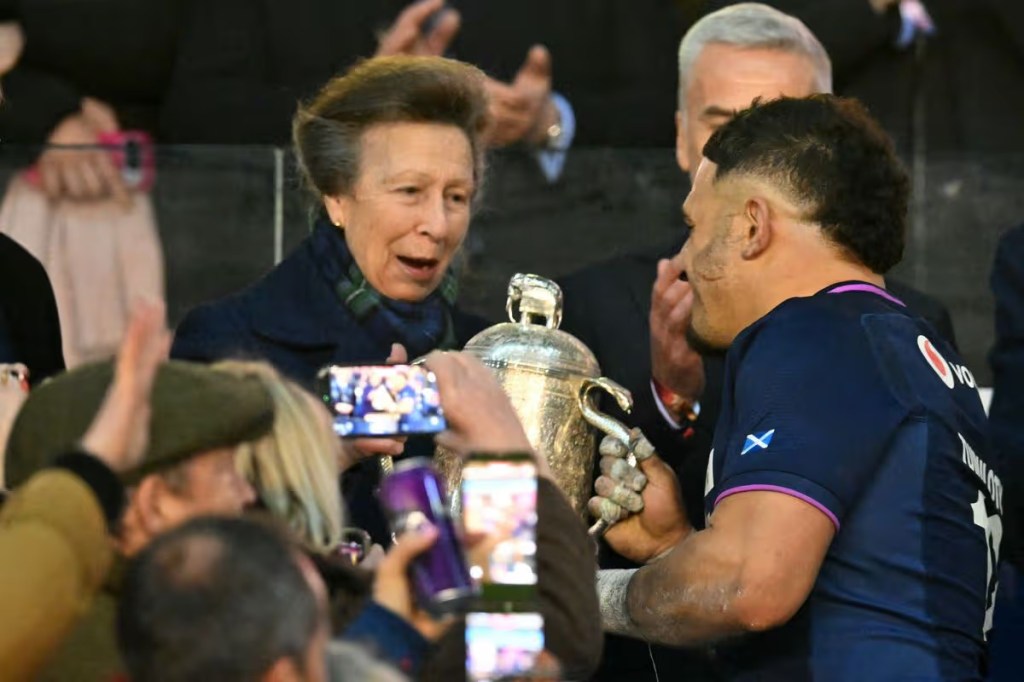
The original, arguably most important, rivalry trophy in the Six Nations is the Calcutta Cup. First awarded in 1879 at Raeburn Place19, the Calcutta Cup had originally been donated by the Calcutta Rugby Football Club, a club formed by former Rugby School pupils and British Army soldiers living in Kolkata. The club was disbanded in 1878, and the club decided to create a trophy in memoriam. The trophy is made of 270 silver rupees20 and was donated to the Rugby Football Union, originally to be the trophy for a Challenge Cup-style competition. However, as discussed previously, the RFU were distinctly opposed to any form of organised competition, leaving the trophy to be used for the annual international match against Scotland from 187921. Throughout the years, the battle for the trophy has primarily existed on the pitch. However, in 1988, following a 9-6 win for England at Murrayfield, the trophy was significantly damaged by players from both teams. England’s Dean Richards was given a one-match ban by the RFU, whilst Scotland’s John Jeffrey was handed a six-month ban by the SRU for his part. Legend has it that the trophy was used as a ball in a street game during post match drinks2223. The original trophy now resides permanently at the World Rugby Museum as it is too fragile to be moved24. Both nations now own replicas of the trophy, and these are the trophies lifted by players after the match.
The remaining seven trophies have all been introduced in the last fifty years. The Millennium Trophy (England and Ireland) was introduced to the Five Nations in 1989, after first being played for in a special match in 1988 to celebrate Dublin’s millenium25. In the same year, the Centenary Quaich would be competed for by the Scots and Irish to celebrate a century of the International Rugby Football Board. Interestingly, Wales is not a part of this contest despite also being a founding member. The Giuseppe Garibaldi Trophy (France and Italy) was introduced in 2007, Auld Alliance Trophy (France and Scotland) and Doddie Weir Cup (Wales and Scotland) both in 2018, the Cuttitta Cup (Italy and Scotland) in 2022, and the Solidarity Trophy (Ireland and France) in 2026. Of the newest five, three represent individuals (Giuseppe Garibaldi, Doddie Weir and Massimo Cuttitta), one commemorates those who lost their lives in World War One (Auld Alliance), and one represents ‘historic links’ between the two nations (Solidarity Trophy). Only the Solidarity Trophy is used in both the Men’s and Women’s Six Nations26.
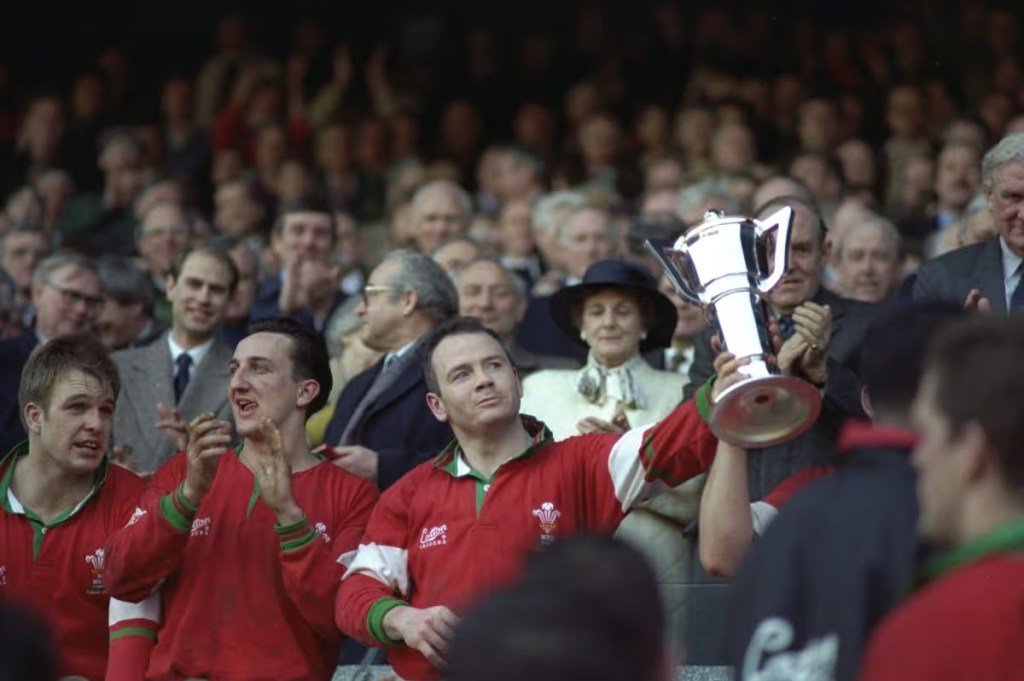
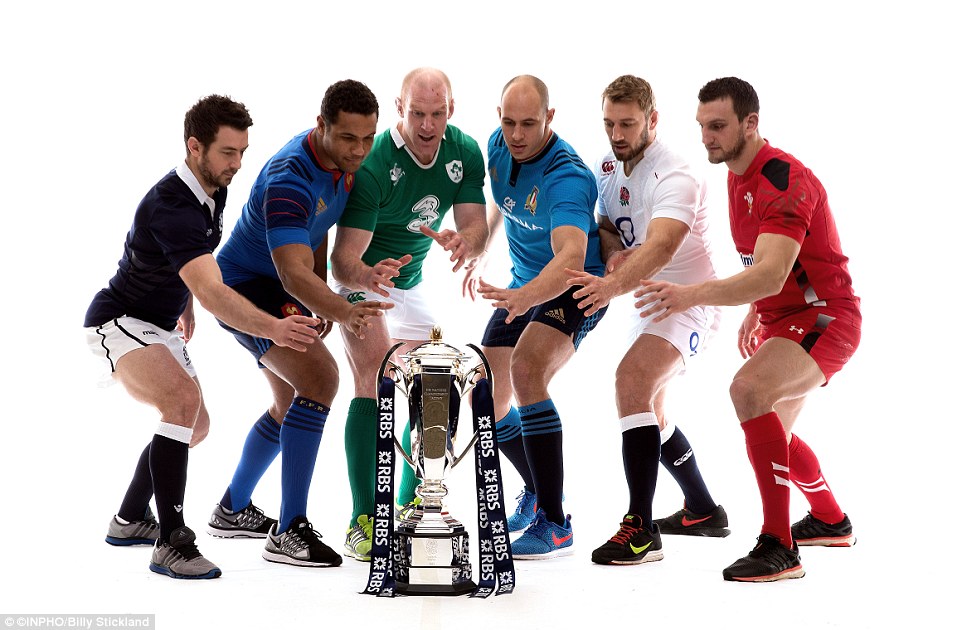
One of the more bizarre facts about the Six Nations is that a physical trophy would not be awarded to the winners of the competition until 110 years after its inception. The original trophy was commissioned by the then Earl of Westmorland, who would die just six months after it was first awarded in 1993. The trophy had 15 sides, one for each player, and was designed to hold five bottles of champagne, one bottle for each of the Five Nations27. The trophy was replaced just 22 years later, as it was felt it no longer represented the championship correctly, due to the championship expansion, and due to internal erosion caused by champagne28. The new trophy consists of six sides29, one for each country, although there is no official word on its champagne capacity.
Across its 143-year history, 131 editions of the Six Nations have been started, and 120 of those have been completed30. Despite constant speculation, Six Nations CEO Tom Harrison officially confirmed in February 2026 that there were no plans for expansion and confirmed that promotion and relegation for the contest was off the table31. Whilst the rest of the rugby world is rapidly changing, with the introduction of the Nations Championship and the pause of The Rugby Championship, it seems that the Six Nations will remain consistent.
There is a significant amount of strange anecdotes and cultural events which have been glossed over or excluded entirely from this article, for a full history of the competition would be a lengthy tale. In fact, Terry Godwin’s book The International Rugby Championship 1883-1983 comprises a whopping 498 pages. I hope this article was able to cover some of the bigger tales and offer some explanations into the foundations of the tournament, in what is the second article I have written about the competition. If you would like to read the first, you can find my article on Spain in the Six Nations here.
If you would like more regular updates, please check out my instagram, twitter and/or bluesky. You can also catch me podding every Tuesday morning with WRRAP. I also recently recorded the first episode of the second season of Women’s Rugby Treehouse. An audio version of this post is also available in all good podcasting locations, video versions are now available on YouTube and Spotify. I’d also like to thank my good friend Anca for helping me with the Romanian pronunciations for the audio and video versions of this post. As always, references are below.
-Hattie
Thanks for reading The Rugby History Project! Subscribe for free to receive new posts, or consider upgrading to Historian Tier to support the project!
- Tony Collins and Huw Richards, “When Six Was Four- The Roots of the Six Nations,” February 4, 2019 https://open.spotify.com/episode/6llixusX7KyeWSP4VW0vn2?si=PcYiHZ8oRoy-CXBiGu4tZA&t=1258. ↩︎
- Tony Collins, The Oval World: A Global History of Rugby (Bloomsbury Publishing, 2015), pp. 60. ↩︎
- World Rugby Museum, “Points Scoring Through The Ages,” World Rugby Museum, May 7, 2024 <https://worldrugbymuseum.com/from-the-vaults/evolution-of-rugby/points-scoring-through-the-ages>. ↩︎
- He quite literally wrote the book on the first century of international rugby results. ↩︎
- World Rugby Museum, “Points Scoring Through The Ages.” ↩︎
- John White, The Six Nations Rugby Miscellany (Carlton Books, 2016), pp. 63. ↩︎
- White, The Six Nations Rugby Miscellany, pp. 24. ↩︎
- John Griffiths, “League v Union, the Grand Slam, and Leading Scorers in the International Championship – ESPN,” ESPN.Com, March 30, 2009 <https://www.espn.co.uk/rugby/story/_/id/15410697/league-v-union-grand-slam-leading-scorers-international-championship>. ↩︎
- IrishExaminer.com, “Bonus Points System to Be Trialled in Six Nations,” Irish Examiner, November 30, 2016 <https://www.irishexaminer.com/sport/rugby/arid-30766444.html>. ↩︎
- Gareth Rhys Owen, “Six Nations: Wales Receive the Wooden Spoon – but What Is It?,” BBC News, March 16, 2024 <https://www.bbc.co.uk/news/uk-wales-68575509>.. ↩︎
- Huw Richards, A Game for Hooligans: The History of Rugby Union, 2007, pp. 204. ↩︎
- Tony Collins and Huw Richards, “When Six Was Four- The Roots of the Six Nations,” February 4, 2019 https://open.spotify.com/episode/6llixusX7KyeWSP4VW0vn2?si=PcYiHZ8oRoy-CXBiGu4tZA&t=1258. ↩︎
- Collins, The Oval World: A Global History of Rugby, pp. 306-308. ↩︎
- Richards, A Game for Hooligans: The History of Rugby Union, pp. 235. ↩︎
- Ryan Herman, “Romania,” Rugby Journal, no. 14 (2021) <https://www.therugbyjournal.com/rugby-blog/romania>. ↩︎
- Herman, “Romania.” ↩︎
- Shared with England and Wales, their first solo win was in 1959. ↩︎
- “Irish Rugby | IRFU and FFR Unveil New Trophy for Ireland and France Six Nations Matches,” February 2, 2026 https://www.irishrugby.ie/2026/02/02/irfu-and-ffr-unveil-new-trophy-for-ireland-and-france-six-nations-matches/. ↩︎
- White, The Six Nations Rugby Miscellany, pp. 138. ↩︎
- Ben Johnson, “The History of the Calcutta Cup,” Historic UK, February 14, 2026 <https://www.historic-uk.com/HistoryUK/HistoryofBritain/The-Calcutta-Cup/>. ↩︎
- Espn, “What Is the Calcutta Cup? England vs. Scotland Rivalry Explained – ESPN,” ESPN.Com, February 14, 2026 <https://www.espn.co.uk/rugby/story/_/id/47868876/what-calcutta-cup-england-scotland-rivalry-explained-six-nations>. ↩︎
- Sometimes reported as a rugby game, sometimes as football. ↩︎
- White, The Six Nations Rugby Miscellany, pp. 11. ↩︎
- Johnson, “The History of the Calcutta Cup.” ↩︎
- White, The Six Nations Rugby Miscellany, pp. 20. ↩︎
- The Solidarity Trophy is the first rivalry trophy in the Women’s Six Nations, although the Siobhan Cattigan Cup has been suggested for the match between Scotland and Ireland for many years. ↩︎
- RBS 6 Nations Official Website, “Official Website of the RBS 6 Nations 2007,” 2007 https://web.archive.org/web/20070202013827/http://www.rbs6nations.com/trophy_english.htm. ↩︎
- Richard Edwards, “Six Nations: The Championship Trophy, 30 Years On,” Thomas Lyte, February 3, 2023 <https://thomaslyte.com/six-nations-the-championship-trophy-30-years-on-history/>. ↩︎
- Irish Independent, “Will Ireland Be Getting Their Hands on This? New Trophy for the RBS Six Nations Unveiled,” Irish Independent, January 28, 2015 <https://www.independent.ie/sport/rugby/six-nations/will-ireland-be-getting-their-hands-on-this-new-trophy-for-the-rbs-six-nations-unveiled/30944386.html>. ↩︎
- Nine editions prior to World War One were deemed ‘incomplete’ for various grievences or ambivalence between unions, the 1972 competition was abandoned after Scotland and Wales refused to travel to Dublin following Bloody Sunday and the current edition is ongoing as of writing. ↩︎
- Business of Sport, “Inside The Six Nations: How Rugby Is Changing…For the Better | Tom Harrison, Six Nations CEO,” YouTube, February 3, 2026 <https://www.youtube.com/watch?v=2lt6OovvOAY>. ↩︎


 Home
Home 
Leave a comment