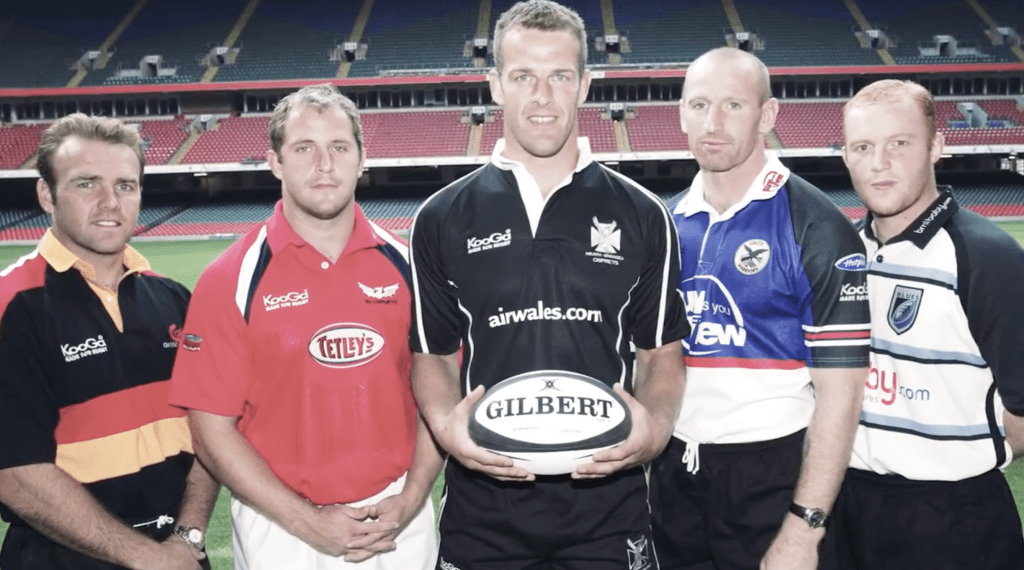
After months of speculation, on the 24th October 2025, the Welsh Rugby Union announced that they would be cutting the number of men’s professional teams from four to three. Let’s look back at the last time the Welsh Rugby Union cut a region.
The regionalisation of Welsh rugby in the early 2000s came after a decade of poor results at international level and the advent of professionalism across the globe. Despite it taking place over two decades ago, it remains one of the most controversial events in Welsh rugby history. At the time of writing in January 2026, the Welsh Rugby Union is preparing to cut one of these regions, following a run of poor results and financial constraints. However, this is not the first time that the Welsh Rugby Union has cut a region. This article looks at the short history of the Celtic Warriors, and asks the question: has the WRU learnt anything from the tale of the Warriors?
On April Fools Day 2003, the Welsh Rugby Union’s Chief Executive Officer, David Moffett, announced that after significant consultation and almost monthly emergency general meetings1, rugby in Wales would be undergoing a process known as regionalisation. Each region would represent a large geographic area of Wales, rather than an individual town or even village. This was based on the New Zealand professional model, rather than the club-based model that England and France were using2. There would be five new regions, each featuring a professional men’s team and eventually its own development network. The five new professional teams would play in the Celtic League3 and the European Championship, replacing the nine previous Welsh clubs who had played in those competitions.
The extended talks prior to the announcement of the five regions concerned the number of regions, along with the makeup of the regions themselves. Whilst the original idea was for club mergers4, the reality was that in fact two of the regions comprised of one sole team, whilst the other three were amalgamations. The ‘new’ Llanelli side would play at Stradey Park, whilst the Cardiff side would play at the Arms Park. The other three regions, however, were required to create new identities as well as merge boards, finances, and players. Neath and Swansea, Newport and Ebbw Vale, and Bridgend and Pontypridd were all set to merge to create the final three regions.
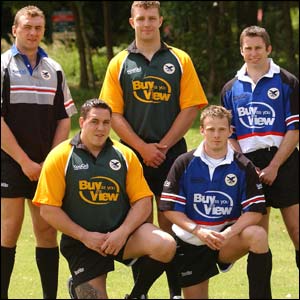
Bridgend and Pontypridd were both in-form clubs during the early 2000s, with Bridgend winning the 2003 Welsh Premiership title5 and Pontypridd usually obtaining a top 5 league finish during that era. Both teams featured a plethora of Welsh internationals, including but not limited to Neil Jenkins and Gareth Jenkins at Pontypridd and Gareth Thomas and Ryan Jones at Bridgend6. Former Pontypridd coach Lynn Howells, along with his assistant and former Bridgend coach Allan Lewis7, were able to put together an extremely strong squad. However, the relatively stable coaching partnership of Howells and Lewis, and the strong squad would prove to be one of the only highlights of the Warriors tenure.
Combining the two clubs to create a region was controversial. Previous plans had involved Bridgend merging with Neath, which they seemed happy enough to do. However, Pontypridd fans bristled at the prospect of merging with Cardiff, with one fan going as far as to say he would close the curtains if a Pontypridd-Cardiff region played in his garden8. Forging an identity that comprised of both the representation of Valleys rugby, as well as the legacy of Bridgend, proved tricky. After launching without a name, the original name, RCT Ravens, was mooted by the WRU for being branded as the Rhondda Valley and for featuring Bridgend’s nickname, the Ravens. After a brief flirtation with the name ‘the Celtic Crusaders’, the neutral ‘Celtic Warriors’ name was eventually chosen9. Along with the tricky identity issue, behind the scenes, there was a power battle brewing between the two sides. As Lynn Howells explains in his autobiography Despite the Knockbacks, the primary sponsors of Pontypridd had been the hire purchase company Buy As You View. The company were a slightly different type of sponsor to the Peter Thomas model at Cardiff or even the Leighton Samuel model at Bridgend. Instead of pumping money directly into the club, the company had employed numerous players and provided goods such as cars10. Unfortunately, in the world of professional rugby, this was not enough to keep a club afloat, let alone one of the new Welsh regions. Whilst Bridgend and Pontypridd had originally both owned equal shares in the Celtic Warriors, following financial difficulties, Pontypridd were forced to sell their shares in the team for £100,00011.
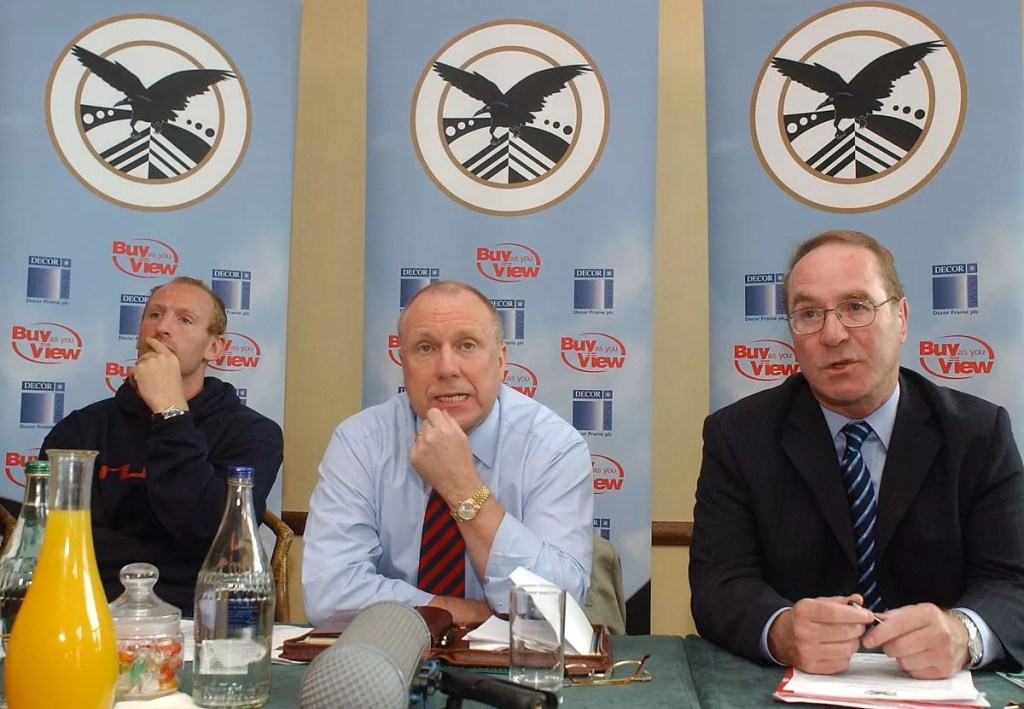
Bridgend owner Leighton Samuel had always been an interesting character. Loud and brash with little to no filter, Samuel frequently caused issues during the Warriors’ tenure. It was clear to see that Samuel was not going to be easy to work with from the get-go, for example, he announced that it was likely the five regions would become four within two to three years due to financial difficulties prior to the 2003-04 season12. Samuel yo-yoed in and out of the region, consistently threatening to and announcing he was leaving the club or that he was cutting funding. It is clear, however, that what Samuel really longed for was complete control. Whilst it had originally been agreed that the games would be split between Pontypridd’s Sardis Road and Bridgend’s Brewery Fields, Samuel made it known after the teams’ pre-season fixture at Sardis Road against Bath, that he was not happy with the stadium13. Previous to that, Chief Executive Gareth Thomas14 resigned from his position as he stated that his working relationship with Samuel was ‘unworkable’15. With Samuel in control as Chief Executive, and holding 50% of the shares in the region, it was not surprising that when Pontypridd were facing debts of £700,000, he offered to pay off the debts in exchange for Pontypridd’s share in the Celtic Warriors16. This original offer was rejected by the WRU. However, Samuel would go on to buy out Pontypridd for the much lower price of £100,000. Surprisingly, though, Samuel would not keep the shares. Instead, he gave them, willingly and free of charge, to the Welsh Rugby Union.
Whilst the WRU had rejected the original shares sale, as they did not want one person to have full control of a region17, Samuel’s decision to gift Pontypridd’s share of the Warriors to the WRU is one of the most baffling aspects of the Warriors saga. Whilst Samuel likely knew he couldn’t keep the Warriors afloat financially on his own, having invested reportedly close to a million pounds in the region and much more in Bridgend RFC itself, buying the shares just to give them away to the governing body, which would have probably been forced to step in if Pontypridd had gone under, seems odd.
Samuel had never truly been in control of the region’s spending. The Warriors had a far-inflated wage bill, as Samuel had offered out contracts far larger than the market rate; the combined total for players’ wages was £200,000 per month, according to Howells18. With the Welsh Rugby Union providing £137,500 per month, the Warriors were required to not only pay roughly a third19 of the players’ wages but also all of the other club expenses. Samuel’s business plan rested on the idea that the Warriors would make up the deficit through money spent at the games. With only 2500 people attending games on average, this was not coming to pass, and gave the Warriors the unfortunate title of the lowest average attendance in regional rugby2021. Following the WRU’s acquisition of shares in November 2003, the Brewery Fields became the region’s primary home. The move not only gave Samuel more control of the team itself but also the revenue, as he owned the stadium, but in the process, alienated Pontypridd fans further. With Samuel in primary control and the team based in Bridgend, the financial woes continued, with Howells estimating that the region was losing roughly £50,000 per month2223.
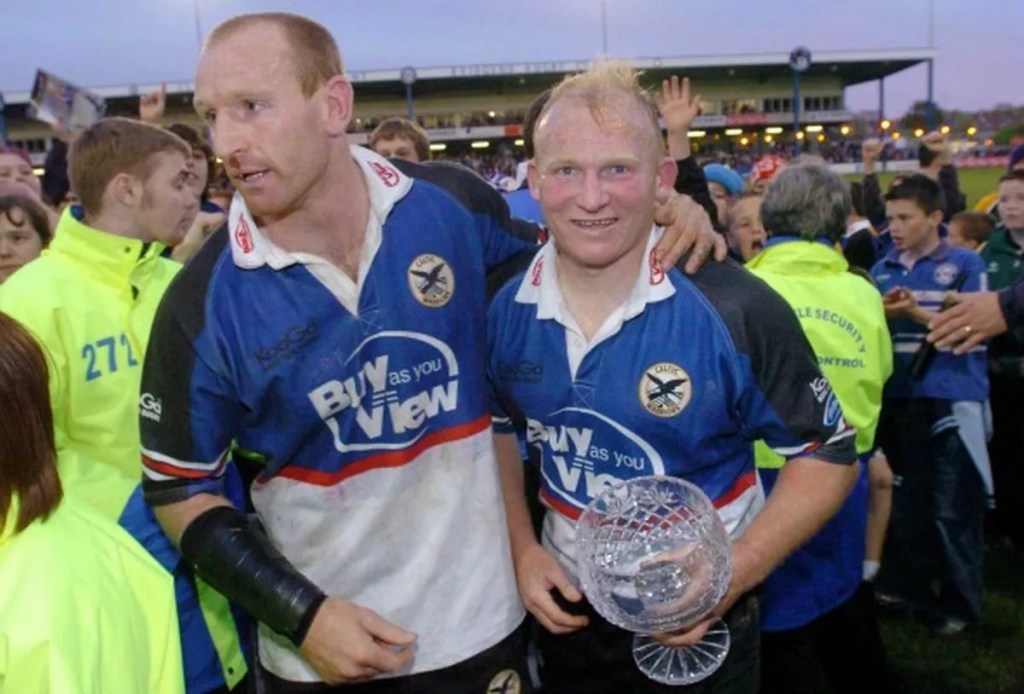
‘There is a feeling that with Leighton Samuel running the show then we could either fold or win the Heineken Cup!’
-Lynn Howells, Celtic Warriors Head Coach, 201224
Gareth Thomas described Celtic Warriors as a sinking ship when he resigned in September 2003, and by April 2004, Leighton Samuel was much like the most negative portrayals of Titanic captain Edward Smith. In an attempt to save himself25, in April, Samuel announced publicly that not only was he resigning from his position at the Celtic Warriors, but he would also stop all financial backing the following month26. Whilst this was not the first time that Samuel had resigned or announced he was withdrawing funding, with the WRU now holding equal stakes in the region, his threats were taken seriously.
‘I would have thought it would have been good to at least have had a discussion with them. I’m extremely disappointed that such a serious and significant statement, with obvious far-reaching consequences, was made to the media before it was discussed at board level.’
-David Moffett, WRU CEO, 200427
It is possible that had the Union been made aware prior to the announcement, the outcome may have been different. It is also possible that the Union expected Moffett to withdraw funding. Reportedly, the Welsh Rugby Union had sent a letter to all five regions regarding an upcoming audit, which perhaps led to Samuel’s announcement. The letters regarding finances were prompted by the publicly known financial concerns of the Newport-Gwent Dragons, and the WRU’s inkling that others may also be struggling. Howells postulates that with the Dragons financial benefactor having significantly deeper pockets than Samuel and the other three being financially stable at the time, Samuel was prompted to not only announce the withdrawal of his funding, but also to contact the WRU to seek a way out.
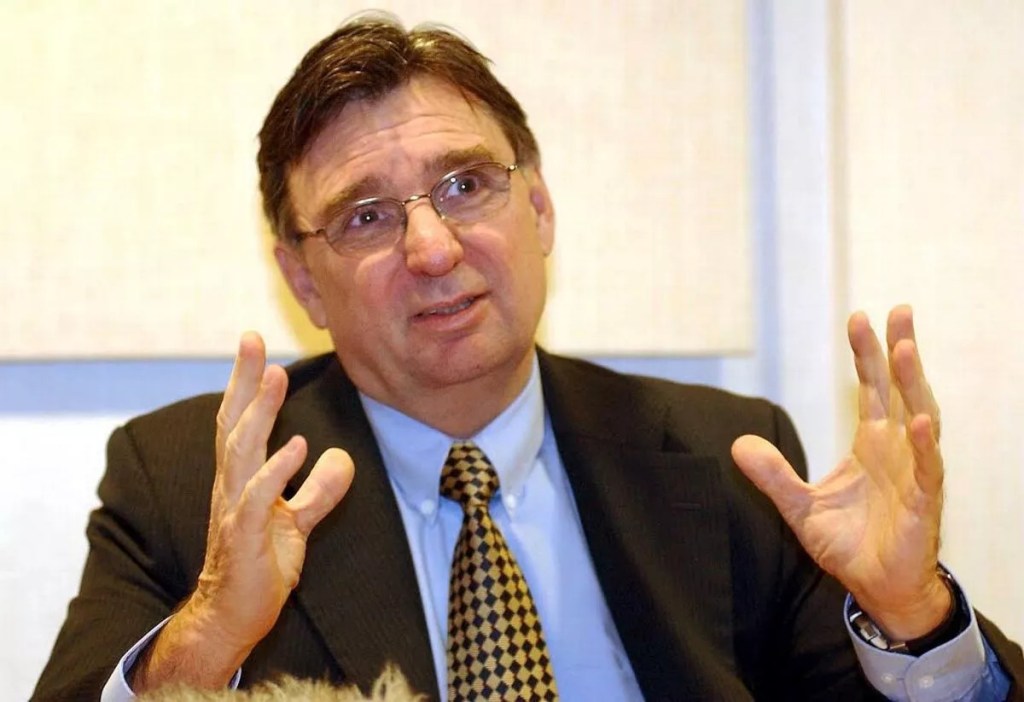
A fortnight in May 2004 would change the makeup of Welsh rugby permanently. Various stories have come out from this period, including rather unbelievable tales from Leighton Samuel. The facts, however, are as follows: Leighton Samuel sold Bridgend’s shares in the Celtic Warriors; the final agreement was made two days prior to the Warriors final game of the season out in Galway; the Welsh Rugby Union called the Warriors to the Vale on the following Monday; and, finally, the Celtic Warriors were dissolved.
Lynn Howells’ account of the dissolution of the Warriors is perhaps the most in-depth and most quoted. According to Howells, the team had travelled to Galway, and during the post-match celebrations, he had received a phone call from coach Richard Webster. Webster, who had returned home early, had got wind of rumours in Wales that Samuel had sold his shares to the WRU. Convinced that once again, Samuel was crying wolf, Howells ignored the rumours. The following Monday, staff and coaches were called in for an afternoon meeting at the Vale. Due to start at 4pm, the meeting was delayed by lawyers, but finally, at 5pm, the team were informed that Samuel had sold his shares to the WRU. In meetings and discussions over the following days, it became increasingly obvious that the Warriors were no more and that the Welsh Rugby Union would be disbanding the region28
The dissolution of the Warriors was protracted. Some players were picked up by other regions, others went to England or France, and some had their careers ended by the abrupt closure of the region. Additionally, Samuel ended up in a legal battle as he stated that he had entered into a verbal agreement with the WRU, which he said meant that the WRU weren’t allowed to close down the region29. The remaining four regions were also required to pay the WRU £312,500 each so that the Union could both pay out Samuel and cover any additional costs, such as final wages and outstanding bills30.
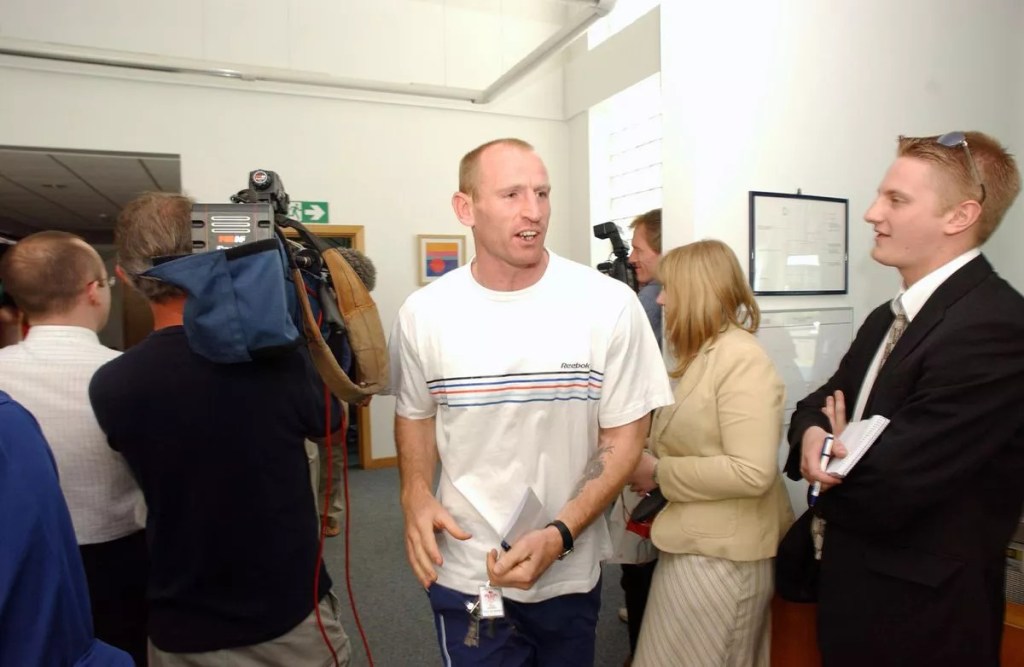
Interestingly, despite the memory of the 2003-04 season being the advent of the regions and the dissolution of the Celtic Warriors, it was arguably the most successful season in Welsh regional rugby and kick-started the Golden Age. As Huw Griffin discusses in his article The Welsh Regions Have Always Been Bad… Haven’t They?, the 2003-04 season saw the Scarlets win the Celtic League, and all five teams come within the top 6. The following year saw the national men’s team win a Six Nations Grand Slam and more regional success as the Ospreys won the league.
Samuel would go on to resurrect the Warriors as a rugby league side known as the Celtic Crusaders. The team lasted six seasons, including three in the Super League, before folding in 2011. Samuel himself would continue in business until 2014, when his picture frame business Dekor Limited was dissolved31.
Despite going through administration in 2003, Pontypridd RFC are still playing. Currently sat in the Premiership, having won the league four times during the 2010s. Today, the club comes under the Cardiff regional system, and whilst professional players have come through the ranks of Pontypridd, support is just as low as expected for the capital city-based side32. Bridgend RFC would go on to become Bridgend Ravens following the withdrawal of support by Leighton Samuel during the Celtic Warriors era. The team are currently a semi-professional side playing in Super Rygbi Cymru, having spent much of the past two decades in the Welsh Premiership. The area is now covered by the Ospreys region, with Bridgend based fan Rhiana Lewis stating that the Ospreys have successfully absorbed the area, with games and community events taking place in the town33. The region is playing their 2025/26 home games at the Brewery Fields whilst construction is underway for their return to St. Helens.
The demise of the Warriors in the end did not come down to the on-field success of the team, who finished fourth in the league34, or the financial losses of the region, as proven by the Dragons in the same year. Rather, it came down to a benefactor who had underestimated the cost of running a truly professional sports team and a governing body who had initially preferred the idea of having four teams instead of five. There are still many questions to be answered when it comes to the Celtic Warriors, with very few of the stories adding up and gaping holes in the logic. For this author, Leighton Samuel buying Pontypridd’s shares to gift them to the WRU, along with him selling Bridgend’s shares to the WRU and reportedly expecting the region to stay open, makes little sense. There is the possibility that either Leighton Samuel is lying and that both sales were always to result in the closure of the region, or that the WRU pulled a fast one on Samuel and set him up as the fall guy. Both of these speculations, however, are simply based on the incredibly un-academic method of ‘gut feeling’.
The demise of the Warriors, caused by the loss of a benefactor, somewhat mirrors the plight of Cardiff Rugby in 2025. Following the passing of long-time benefactor Peter Thomas in 202335, the club struggled financially. Now under the control of the Welsh Rugby Union, it could be argued that it was the catalyst for the current predicament of the regions. The Welsh Rugby Union have floated the idea of reducing the number of regions again at various points over the last decade. The 2025-26 decision is perhaps the closest that the Union has come to doing so, partially due to the fact that the Union currently holds a significant amount of power through their ownership of Cardiff Rugby as well as the poor results of both the men’s national team and the regions. With rumours that the Ospreys owners Y11 have put in a bid to purchase the capital city-based region, and that by doing so could see the closure of the Ospreys, it does feel that the current situation is a rewriting of 2004, with few of the lessons learned.
Abi Tierney, Dave Reddin and Richard Collier-Keywood are building personal legacies in Wales not dissimilar to that of David Moffett. Reddin himself has stated that he is not interested in the history of the teams involved when making decisions; however, it may have been wise for Reddin, Tierney and Collier-Keywood to look back at the history of the Celtic Warriors when making their decision.
Author’s note: The history of the Celtic Warriors is complex and confusing, as many of the sources are personal anecdotes which do not align. Much of my knowledge comes from Sei Williams’ Welsh Rugby: What Went Wrong? and Lynn Howells autobiography, Despite the Knockbacks. Unfortunately, even with these sources, the story remains somewhat of a mystery due to certain parties’36 misuse of the truth.
In unrelated news, I was recently interviewed by Lena-Zaharah Mohammed for BBC Wales regarding the misogynistic comments made by Lyn Jones on S4C. You can find that piece here. And because I am the human embodiment of glitter, I also made an appearance on a bonus episode of Sosbans and Sidesteps as well as an appearance on Scrum of the Earth.
If you would like more regular updates, please check out my instagram, twitter and/or bluesky. You can also catch me podding every Tuesday morning with WRRAP. An audio version of this post is also available in all good podcasting locations, and as always, references are below.
-Hattie
Thanks for reading The Rugby History Project! Subscribe for free to receive new posts, or consider upgrading to Historian Tier to support the project!
- Seimon Williams, Welsh Rugby: What Went Wrong? (Y Lolfa, 2023), pp. 67. ↩︎
- Catch 22 Rugby, “HOW WALES DELETED a PRO RUGBY TEAM | The Rise and Fall of Celtic Warriors,” YouTube, October 23, 2022 <https://www.youtube.com/watch?v=_AKK0nhBLKU>. ↩︎
- The Celtic League was the original name of the URC, comprised of teams from Ireland, Scotland and Wales. ↩︎
- Of the Celtic League teams. ↩︎
- Paul Weaver, “Ravens Fall Prey to the New Order,” The Guardian, May 27, 2003 <https://www.theguardian.com/sport/2003/may/27/rugbyunion.paulweaver>. ↩︎
- Neil Jenkins would retire as Wales’ top points scorer, whilst Gareth Jenkins would retire as the country’s most capped player. Gareth Thomas was the then Welsh captain, whilst Ryan Jones would later set a record for the most caps as Wales captain. ↩︎
- Lynn Howells and Roger Hughes, Despite the Knock-Backs – the Autobiography of Lynn Howells (Yr Lolfa, 2012), pp. 43. ↩︎
- Howells and Hughes, Despite the Knock-Backs – the Autobiography of Lynn Howells, pp. 28. ↩︎
- Howells and Hughes, Despite the Knock-Backs – the Autobiography of Lynn Howells, pp. 51. ↩︎
- Howells and Hughes, Despite the Knock-Backs – the Autobiography of Lynn Howells, pp. 66. ↩︎
- Howells and Hughes, Despite the Knock-Backs – the Autobiography of Lynn Howells, pp. 67. ↩︎
- Howells and Hughes, Despite the Knock-Backs – the Autobiography of Lynn Howells, pp. 52. ↩︎
- Howells and Hughes, Despite the Knock-Backs – the Autobiography of Lynn Howells, pp. 57. ↩︎
- Not to be confused with Celtic Warriors captain Gareth Thomas. Chief Executive Gareth Thomas had previously been chairman at Pontypridd. ↩︎
- Howells and Hughes, Despite the Knock-Backs – the Autobiography of Lynn Howells, pp. 53. ↩︎
- Howells and Hughes, Despite the Knock-Backs – the Autobiography of Lynn Howells, pp. 66. ↩︎
- Bizarre reasoning given the ownership of both Llanelli and Cardiff. ↩︎
- Howells and Hughes, Despite the Knock-Backs – the Autobiography of Lynn Howells, pp. 54. ↩︎
- I’m a historian, not an accountant. ↩︎
- The Celtic Warriors attendance varied heavily but recorded an abysmal 1477 crowd for their first game against the Dragons. ↩︎
- Andy Howell, “The inside Story of the Welsh Rugby Team That Disappeared, 16 Years on from the Bitter Collapse of Celtic Warriors,” Wales Online, January 10, 2020 <https://www.walesonline.co.uk/sport/rugby/rugby-news/inside-story-welsh-rugby-team-15679375>. ↩︎
- Howells and Hughes, Despite the Knock-Backs – the Autobiography of Lynn Howells, pp. 68. ↩︎
- The Dragons were also struggling financially at this time. ↩︎
- Howells and Hughes, Despite the Knock-Backs – the Autobiography of Lynn Howells, pp. 96-97. ↩︎
- Although destroying any shred of respect anybody still had for him. ↩︎
- Williams, Welsh Rugby: What Went Wrong?, pp. 85. ↩︎
- Moffett in Williams, Welsh Rugby: What Went Wrong?, pp. 85 ↩︎
- Howells and Hughes, Despite the Knock-Backs – the Autobiography of Lynn Howells, pp. 99-106. ↩︎
- They settled out of court but regardless, it seems that Samuel was attempting to save face. ↩︎
- Howells and Hughes, Despite the Knock-Backs – the Autobiography of Lynn Howells, pp. 101. ↩︎
- “DEKOR LIMITED Overview – Find and Update Company Information – GOV.UK” <https://find-and-update.company-information.service.gov.uk/company/02663047>. ↩︎
- Rhiana Lewis, interview with the author, 18th January 2026. ↩︎
- Rhiana Lewis, interview with the author, 18th January 2026. ↩︎
- Huw Griffin, “The Welsh Regions Have Always Been Bad… Haven’t They?,” Substack, December 7, 2023 <https://substack.com/home/post/p-139586299?source=queue>. ↩︎
- Bbc Sport, “Peter Thomas: Former Cardiff Chairman Dies Aged 79,” BBC Sport, March 29, 2023 <https://www.bbc.co.uk/sport/rugby-union/65082708>. ↩︎
- Primarily Leighton Samuel. But also autobiographies are a notoriously tricky source to work with as personal truth does not always align with the actual truth. ↩︎
 Home
Home 
Leave a comment